

















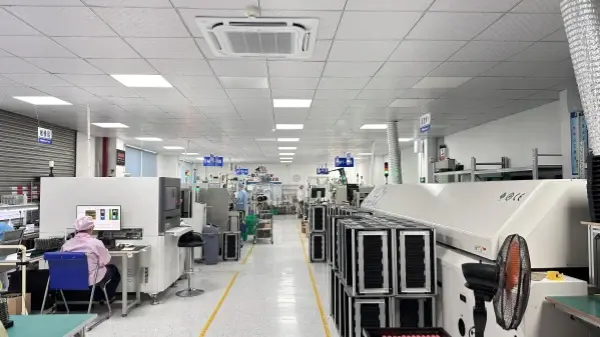
Short overview
The main difference between reflow soldering and wave soldering is this: reflow soldering is used for boards that have surface-mount parts, while wave soldering is used for boards with through-hole parts. Reflow is one of the three main processes in SMT placement. Reflow mainly solders circuit boards that already have parts placed on them. During reflow, the solder paste melts and then cools. The cooling fixes the parts and the pads together.
Below, the Nitto reflow soldering equipment section explains the technical principle of reflow soldering. It also gives a detailed look at placement technology used in the SMT industry. The Nitto Denko reflow machines use a modular, digital, and user-friendly design. They show strong performance, reliability, safety, ease of maintenance, and ease of use. These features help customers lower operating costs. They also help customers produce quality products on time. For wave soldering products, these machines are a top choice and a good investment.
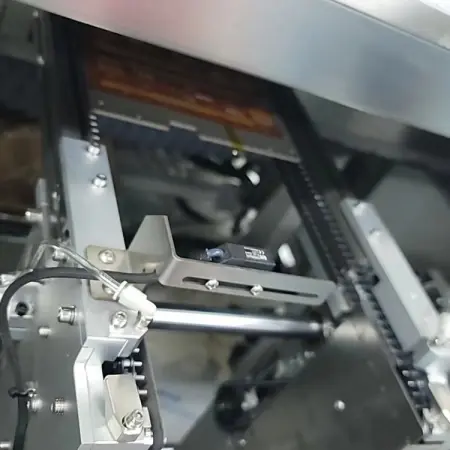
Four new technologies in the wave solder furnace system
1) Vertical spray on the PCB surface (with path optimization system)
A. When the nozzle sprays perpendicular to the PCB, the flux spreads on the board more evenly. The spray has better penetration into holes. This improves the ability of the molten solder to climb and wet.
B. An automatic path optimization system ensures the flux coating is even.
C. Advanced software can adjust spray settings based on the conveyor speed and the PCB width.
(Images referenced in the original text are not included here.)
2) The wave solder uses an iron casting tank with a ceramic surface to lengthen life
A. Using a 10 mm thick cast iron tank wall greatly increases the tank’s resistance to deformation when it heats.
B. Cast iron contains a lot of graphite. Graphite does not wet well with solder, so it causes little corrosion to the tank. To further improve tank corrosion resistance and smoothness, a ceramic treatment is applied to the surface of the cast iron. This further increases the service life.
3) New flow channels and new nozzle designs to reduce oxidation and lower running costs
These changes reduce the amount of oxidation and so lower the customer’s operating cost.
4) New impeller and flow channel design to make the solder wave more stable
- The nozzle, flow channel, and impeller structure directly affect wave stability.
- The wave height can be controlled within ±0.5 mm.
- Mixed preheating advantage a. Infrared preheating raises temperature quickly. Hot air preheating helps keep temperature uniform. b. Using both infrared and hot air gives fast heating and better uniform temperature. c. Mixed preheating is especially suitable for water-soluble flux.
- Built-in local selective spray system A. The local spray moves in X and Y using a stepper motor with a timing belt, ball screw, and linear guide. This allows local selective spraying of flux. B. Selected nozzles can do spot spray, line spray, and rectangular spray. C. The system uses a PC plus motion control board. It responds fast, gives high accuracy, and is programmable. It is easy to operate and clean. D. This is suitable when the spray area is less than 50% of the total area. It can save more than 50% of flux.
- Local nitrogen filling device in the solder pot area A. A local nitrogen filling device in the solder pot can deliver high nitrogen concentration under the board and around the solder nozzle using a small amount of nitrogen. B. It uses a special stainless steel nano-micro-porous tube. The nitrogen diffuses and fills the area evenly with high concentration. C. Three flow meters control three nitrogen lines. Nitrogen use is about 12 m³/h. The oxygen concentration near the solder flow by the nozzle is about 1000 ppm. D. This improves solder quality and reduces solder oxidation. The device does not provide online oxygen concentration detection.
1. Principle of Reflow Soldering
Because electronic PCB boards keep getting smaller, chip parts are more common. Traditional solder methods no longer fit the need. For mixed integrated circuit board assembly, reflow soldering is used. The parts for this assembly are usually chip capacitors, chip inductors, chip transistors, diodes, and so on.
As SMT technology developed and became more complete, more SMC parts and SMD devices appeared. Reflow soldering process and equipment also improved. Reflow use became wide. Almost every electronics product now uses reflow soldering.
Reflow soldering (English: Reflow) melts solder paste that has been pre-applied on the PCB pads. In the melt, the surface-mount parts’ leads or terminals connect mechanically and electrically to the PCB pads. Reflow attaches parts to the board. Reflow works by hot air flow acting on solder joints. The paste flux reacts under a certain high temperature to make the SMD joints form. The name reflow refers to the circulation of hot gas inside the machine that achieves the high temperature needed for soldering.
2. Basic description of a reflow soldering machine (with temperature curve)
When a PCB goes into the heat-up zone:
A. Solvents and gases in the solder paste evaporate. At the same time the flux wets the pads, part leads, and pins. The paste softens and collapses. It covers the pads and blocks oxygen from the pads and part leads.
B. When the PCB enters the soak zone, the board and parts get enough preheat. This prevents damage from a sudden jump into soldering temperature.
C. When the PCB enters the reflow zone, the temperature quickly rises and the paste melts. Liquid solder wets the pads, part leads, and pins. It spreads and flows and forms solder joints by wetting and mixing.
D. The PCB enters the cooling zone and the solder solidifies. This completes reflow soldering.
(A standard reflow temperature profile figure is usually shown here in manuals.)
3. Reflow soldering process requirements
Reflow is common in electronics manufacturing. The boards in our computers use this process. The advantages are: temperature is easy to control, oxidation can be limited during soldering, and production cost is easier to control.
The machine has a heating system. Hot nitrogen or hot air is blown at the board that already has parts. The solder melts and bonds the parts to the PCB.
Tärkeimmät kohdat:
- Set a proper reflow temperature profile. Test the profile with a thermal probe in real time.
- Follow the board’s designed soldering direction during processing.
- Avoid conveyor vibration during soldering.
- Inspect the soldered boards for quality.
- Check if soldering is full, the joint surface is wet, the joint shape is a nice half-moon, and look for solder balls and residues, tombstoning, and cold joints. Also check for color change on the PCB surface. Adjust the temperature profile based on inspection results. During a full production run, regularly check solder quality.
4. Factors that affect reflow soldering
- Large parts such as PLCC and QFP and some discrete chip parts have larger thermal mass. It is harder to solder a large part than a small one.
- The conveyor in a reflow oven moves parts in a loop. The conveyor also acts like a heat sink. The thermal condition at the edge and the center of the heater section are different. So even within a zone, temperatures vary. Each temperature zone in the oven and each position on the board can have different temperatures.
- Product loading affects reproducibility. When adjusting the reflow temperature curve, engineers must make sure it gives consistent results in no-load, with load, and under different load factors. Load factor LF = L / (L + S), where L = length of assembled boards on the conveyor and S = gap between boards. It is harder to get good repeatability when LF is large. Typical large-load-factor range is 0.5–0.9, depending on the product (component density, board type) and the oven type. Good soldering and repeatability need practical experience.
5. Advantages of the reflow soldering process
- Reflow soldering does not immerse the PCB into molten solder. Instead, it uses localized heating. So the parts see less thermal shock. Parts are less likely to be damaged by overheating.
- Because solder is applied only at the joint and heat is applied locally, defects like bridging are easier to avoid.
- The solder in reflow is used once only. There is no reuse of solder. This keeps the solder clean and free of impurities and helps ensure good solder joints.
6. Reflow process flow
Reflow is used for surface-mount boards. The flow is relatively complex and has two main types: single-side mounting and double-side mounting.
A. Single-side mounting: apply solder paste → place parts (by hand or by machine) → reflow → inspect and electrical test.
B. Double-side mounting: A-side apply paste → place parts → reflow → B-side apply paste → place parts → reflow → inspect and electrical test.
A simple summary is: “screen print solder paste → place parts → reflow.” The key is accurate screen printing. The yield of placement depends on the pick-and-place machine’s PPM. For reflow, control the temperature ramp, peak temperature and the cooling curve.
7. Reflow machine maintenance rules
After using a reflow machine you must do maintenance. This helps keep the equipment life long.
- Daily check each part of the machine. Pay special attention to the conveyor mesh belt. Make sure it does not jam or fall off.
- When repairing the machine, shut the power off to avoid electric shock or short circuits.
- Keep the machine stable. It must not tilt or be unstable.
- If a heating zone stops heating, first check the related fuse. (In the original text this sentence seems cut; the fuse is often the first thing to check.)
8. Safety and operation notes for reflow machines
- To ensure personal safety, operators must remove name badges and hanging jewelry. Do not wear loose sleeves.
- Watch for high temperature and avoid burns. Wear proper protection.
- Do not change the oven temperature zones or conveyor speed at will.
- Ensure room ventilation. The exhaust duct should lead outside the window.
Short closing summary
- Reflow is for SMD boards. Wave soldering is for through-hole boards.
- Reflow melts pre-applied paste with controlled heat and cooling. Wave dips the board into a moving solder wave.
- Reflow gives good control of temperature and oxidation and is widely used in SMT assembly.
- Modern wave solder systems add vertical spray, better furnace materials, improved flow design, mixed preheat, local spray, and local nitrogen to improve yield and lower cost.
- Correct temperature profiles, load planning, careful inspection, and regular maintenance are key to stable yield for both reflow and wave processes.

