

















You need boards fast. You type “quick turn pcb assembly” into Google. Every website promises 24-hour delivery. But when you upload your files, the sales rep calls back: “We need 8 days. Your BOM has long-lead parts.”
I have worked in PCB manufacturing for 15 years. I have seen this happen thousands of times. The gap between marketing promises and factory reality costs projects weeks of schedule.
This guide is different. I will explain what quick turn PCB assembly actually means on the factory floor. You will learn the real turnaround formula, what slows things down, how to prepare files correctly, and when you truly need IPC Class 3 inspection standards. No buzzwords. Just engineering facts from someone who runs these lines every day.
We will cover turnkey quick turn PCB assembly quotes, DFM checklists that prevent re-spins, and how to choose a partner who delivers on time—not just on the website.
What Is Quick Turn PCB Assembly?
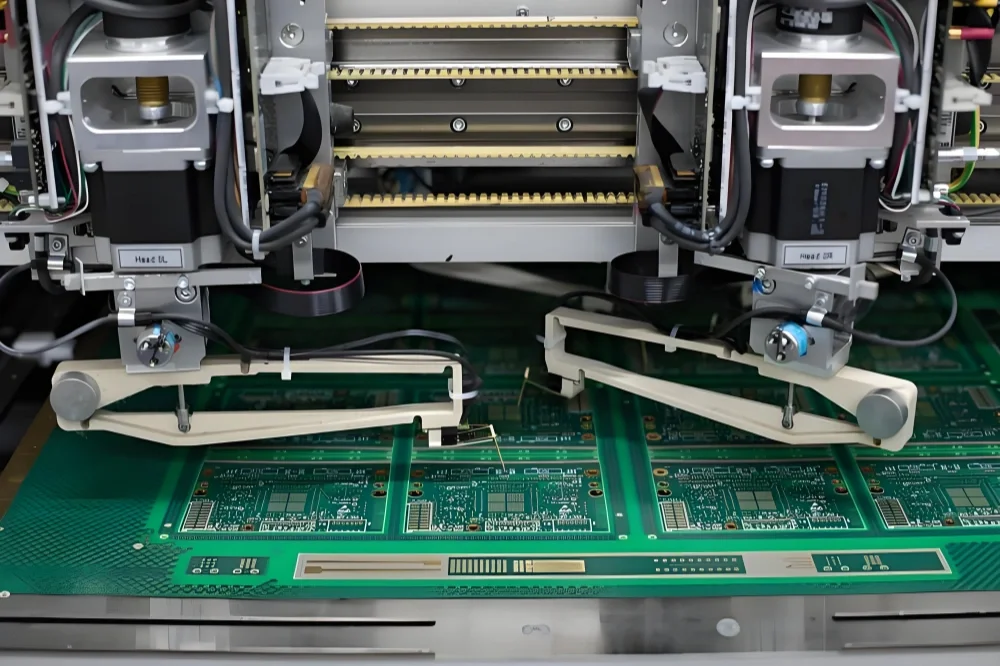
Quick turn PCB assembly means producing assembled circuit boards faster than standard commercial lead times. In a real factory, this is not just “working faster.” It requires dedicated production lanes, in-house component stock, and a design review process measured in hours, not days.
Standard PCBA lead times run 3 to 4 weeks. Quick turn compresses this to 2 to 10 calendar days. True 24-hour PCBA exists—but only under strict conditions we will cover later.
Key Features of a Genuine Quick Turn PCBA Service:
- Dedicated high-mix SMT line with rapid changeover capability (under 15 minutes)
- In-house bare PCB fabrication or pre-stocked standard laminates (FR4 TG130/170)
- Component warehouse with 100,000+ SKU in stock for immediate kitting
- Automated optical inspection and flying probe testing on every order
- DFM review completed within 4 hours of file receipt
- Single point of contact managing your order from Gerber to shipment
A quick turn PCB manufacturer is not just a standard factory running overtime. It is a factory designed for speed.
Benefits of Quick Turn PCB Assembly Orders
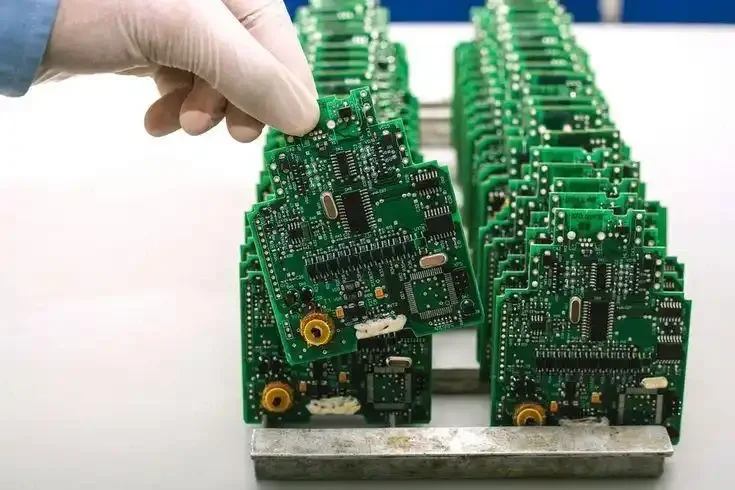
1. Faster Time-to-Market
I once worked with a medical device startup that needed functional prototypes for an investor demo. The standard lead time was 21 days. We delivered assembled boards in 7 days. They secured funding. Delayed prototypes can mean missed market windows or lost investor confidence.
Quick turn prototype PCB assembly compresses the entire development cycle. You test sooner. You find problems sooner. You fix them sooner.
2. Cost-Effective Prototyping
Many engineers assume fast equals expensive. The opposite is often true. When you run 10 prototype boards through a dedicated quick turn line, you avoid paying setup costs amortized across large production batches. You also avoid the hidden cost of idle engineering time waiting for boards.
A turnkey quick turn PCB assembly quote typically ranges from $250–$800 for a 10-piece prototype, depending on component count and board size. That is far cheaper than a delayed product launch.
3. Flexibility in Design Iterations
During a recent project, our customer needed three PCB revisions in two weeks. Because we used a standard 4-layer stackup (1.6 mm FR4, 1 oz copper) and kept all parts on our approved stock list, each revision took 5 business days from Gerber submission to shipped PCBA.
Quick turn fast PCB assembly gives you the freedom to experiment. You can compare two analog front-end layouts side by side. You can try a different connector and measure signal integrity. This iterative speed is how good designs become great.
4. Improved Quality Control
This sounds counterintuitive. Should faster builds mean worse quality? Not if the line is built for speed.
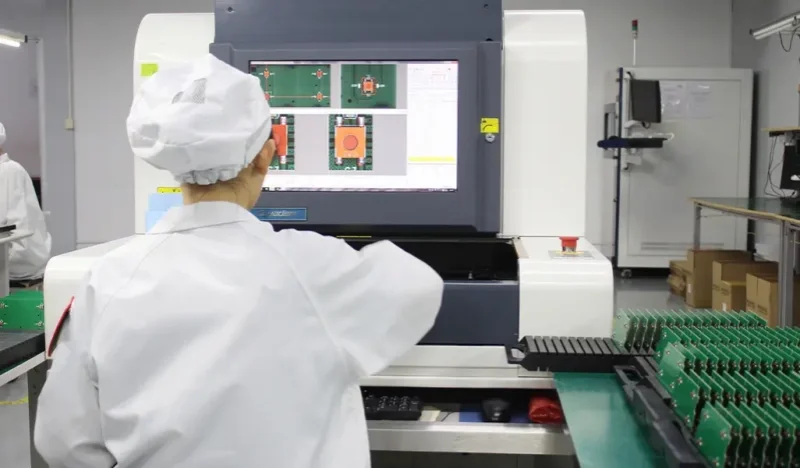
In a proper quick turn PCB assembly process, every board goes through AOI after solder paste printing and after reflow. Flying probe testing checks every net. First-article inspection captures defects before the full batch runs. Because we run small batches, we catch process drift faster than a high-volume line running thousands of boards between inspections.
5. Enhanced Customer Satisfaction
When you deliver prototypes to your internal stakeholders or end customers ahead of schedule, you build trust. One of our long-term partners, an automotive electronics supplier, reduced their internal project approval time by 40% because they could get validation boards in 5 days instead of 4 weeks. Their engineering team could respond to design change requests immediately.
What Is Considered a Quick Turn for PCB Assembly?
Let me correct the biggest marketing myth in our industry.
Many websites advertise “24-hour PCB assembly.” In 15 years of running factories, I can count on one hand the number of true 24-hour turnkey assemblies we have completed. A genuine 24-hour PCBA requires:
- Fewer than 50 total components on the board
- All passives at 0402 size or larger (no 0201 or 01005 parts)
- All BOM items stocked in our warehouse—zero exceptions
- Single-side SMT only, no through-hole, no press-fit, no connectors
- Standard FR4 board pre-fabricated and sitting on the shelf
- Gerber files approved with zero DFM changes
For a typical prototype with 100 components, including a couple of BGAs and a few through-hole connectors, the realistic minimum is 3 business days. For a mixed-technology board with 200+ parts, expect 5 to 8 business days.
Here is what quick turn actually means based on your board:
| Typ desky | Component Count | Realistic Turnaround |
|---|---|---|
| Simple 2-layer, SMT only | ≤50 parts | 2–3 business days |
| Standard 4-layer, SMT + few TH | 50–150 parts | 4–6 business days |
| Complex 6+ layer, BGA, mixed tech | 150–300 parts | 7–10 business days |
| HDI, rigid-flex, exotic materials | 100+ parts | 10–15 business days |
These numbers assume no component lead-time delays and prompt DFM approval.
The factory truth: when a quick turn pcb assembly lead time seems too good to be true, it usually excludes solder paste stencil fabrication, component kitting time, or DFM review. Always ask your supplier what the clock starts counting from.
Factors That Affect the Turnaround Time of a Prototype
1. PCB Complexity
Board complexity determines bare PCB fabrication speed. A standard 2-layer board on FR4 with 6/6 mil trace/space can be fabricated in 24 hours. A 10-layer board with blind vias and controlled impedance takes 5 to 7 days just for fabrication.
Keep your prototype stackup simple. Use standard laminates. Avoid buried vias unless absolutely necessary. Every extra lamination cycle adds a day.
2. Component Availability
This is the number one cause of delay. Forty percent of quick turn orders stall because one BOM line has a 12-week factory lead time.
We check component availability within 2 hours of receiving your order. If a part is not in stock, we offer alternatives from our approved vendor list. You approve them, and we proceed. If you require an exact manufacturer part number that is unavailable, your quick turn order becomes a standard lead-time order.
Consign your own parts if you hold inventory. This can cut 30% off total turnaround. But ensure your kitting is accurate—one missing reel stops the whole line.
3. Assembly Requirements
Mixed-technology boards are slower. Every through-hole part requires either selective soldering or hand soldering. Selective soldering takes 2 to 3 times longer per joint than wave soldering but avoids thermal shock to sensitive SMT components.
Boards requiring conformal coating add a full day for application and curing. Press-fit connectors require specialized tooling setup. All these steps are sequential. They cannot be parallelized.
4. Testing and Quality Assurance
Every board we ship receives automated optical inspection and flying probe electrical testing. These steps take time proportional to board complexity.
A 100-net board takes about 15 minutes for flying probe test. A 1,000-net board takes 90 minutes. If you need IPC Class 3 inspection criteria, we add cross-section analysis on solder joints every 4 hours of production. That adds roughly half a day to the schedule.
5. Production Volume
Quick turn lines are designed for small batches. Running 10 boards takes 2 hours on the pick-and-place machine. Running 500 boards takes 8 hours, plus additional reflow cycle time, plus extended inspection.
Our small production quick turn capacity caps at 500 units. Beyond that, we shift to a dedicated production line, and lead times follow standard schedules of 10 to 15 business days.
How Component Selection Impacts Quick Turn Assembly Cost and Speed
Here is a lesson I learned the hard way in my first year as a process engineer. An aerospace customer demanded a specific tantalum capacitor. It was on 16-week allocation. We waited. The project slipped three months. All because of one $2 part.
The 80% rule of quick turn delays: Component kitting causes 80% of missed deadlines. Design complexity causes 15%. Everything else causes 5%.
For true quick turn PCB assembly, limit your BOM to standard catalog parts. Use passive components in 0402 size or larger. Avoid parts marked “new product introduction” or “sampling only.” Those parts have zero inventory in distribution channels.
When we manage sourcing for your quick turn order, we search our 100,000+ SKU warehouse first. Parts in stock can be kitted in 4 hours. Parts requiring external purchase take 1.5 days on average if distributors have stock. Parts with factory lead time kill quick turn entirely.
The quick turn pcb assembly cost per unit also depends on component sourcing. Consigned parts eliminate markup but introduce kitting risk. Turnkey sourcing adds 10 to 15% to the BOM cost but transfers supply chain responsibility to us.
A practical tip: ask your assembly partner for their “preferred parts list” before you start Rozvržení desek plošných spojů. Design with components they stock. Your boards will ship faster and cost less.
DFM Quick-Turn Checklist to Avoid Rework
I review approximately 300 designs per year. Most delays caused by customers come from three DFM mistakes. I see them every week. Fix these before you submit Gerber files, and you save an average 2-day re-spin cycle.
Mistake 1: Via-in-Pad Without Resin Fill
When you place a via directly in a BGA pad and do not specify conductive or non-conductive fill, solder wicks down the via during reflow. The result: an open joint or intermittent connection under the BGA, which cannot be visually inspected.
Oprava: Specify via-in-pad with filled and capped vias. Or route vias outside the pad area. Add this note to your fabrication drawing.
Mistake 2: Insufficient Solder Mask Clearance
We see boards with solder mask dams measuring 0.05 mm between fine-pitch pads. The ink cannot resolve that gap reliably. The mask slivers break off, creating solder bridges.
Oprava: Maintain minimum solder mask dam width of 0.1 mm (4 mil) for standard LPI mask. For pads with 0.5 mm pitch or finer, consider mask-defined pads rather than metal-defined.
Mistake 3: Unbalanced Copper Distribution
When outer layer copper density differs significantly from inner layers, the board bows during reflow. Warpage exceeding 0.75% causes open joints on BGAs because the package cannot follow the board curve.
Oprava: Add copper thieving to blank areas on signal layers. Ensure symmetrical stackup. For 4-layer boards, solid ground and power planes on layers 2 and 3 naturally balance inner copper.
Quick Pre-Submission Checklist:
- Gerber files include proper board outline (mechanical layer)
- Centroid file provided with pin 1 location for every component
- BOM with manufacturer part numbers and approved alternatives
- Panelization design if boards are smaller than 50 × 50 mm
- Fiducial marks on rails (3 global fiducials minimum)
- Tooling holes clearly marked
Follow this dfm quick turn pcb assembly checklist, and your order moves straight to CAM processing—no engineering query, no delay.
The Quick Turn PCB Assembly Process
Let me walk you through the factory steps, from file receipt to shipping dock. I will use our 72-hour prototype PCBA flow as the example.
Step 1: Design Review and DFM Analysis (Hours 0–4)
We receive your Gerber, BOM, and centroid files. An engineer runs automated DFM checks: clearance, annular ring, solder mask sliver, copper pour, silkscreen overlap. A human reviews flagged items.
Our standard is to send a DFM report within 4 hours. If you respond within 2 hours, we keep the schedule. If you take 48 hours to approve changes, the clock stops. This is the number one hidden delay customers create for themselves.
Step 2: Component Procurement (Occurs in Parallel)
While DFM runs, our procurement team checks BOM against warehouse inventory. In-stock parts are kitted immediately. Parts needing purchase are ordered from distributors with confirmed stock. Long-lead items trigger an instant email to you with alternative recommendations.
Step 3: PCB Fabrication (Hours 4–28)
For standard FR4 2-to-4-layer boards, our bare PCB line runs 24 hours. The process: inner layer imaging, etching, AOI, lamination, drilling, plating, outer layer imaging, solder mask, silkscreen, surface finish (ENIG is our default for quick turn), routing, electrical test.
We stock common laminates: FR4 TG130, TG170, and Rogers 4350B for RF designs. Using stocked materials avoids 3 to 5 days of supplier lead time.
Step 4: Component Placement (Hours 28–30)
The bare board enters the SMT line. A solder paste stencil (laser-cut, electropolished, fabricated in-house in 2 hours) applies paste. Our pick-and-place machines run at 40,000 cph with automatic fiducial alignment. Changeover between jobs takes approximately 12 minutes.
Step 5: Soldering (Hours 30–31)
Boards pass through a 10-zone reflow oven. The profile is optimized for SAC305 lead-free solder. For mixed-technology boards, through-hole components are placed after reflow and run through selective soldering stations.
Step 6: Inspection and Testing (Hours 31–35)
Post-reflow AOI checks every joint: bridging, tombstoning, insufficient solder, missing components. X-ray inspection examines BGA and QFN joints for void percentage. Flying probe test verifies every net against the netlist.
Step 7: Quality Assurance and Packaging (Hours 35–36)
A final visual inspection under 10x magnification. Boards are cleaned, dry-baked if necessary, vacuum-sealed with desiccant, and packed in static-shield bags. Then they ship via your chosen courier.
This is a real 72-hour quick turn PCB assembly process for a standard prototype. Add time for more layers, more parts, or specialized testing. But the factory fundamentals remain identical.
Quick Turn PCB Assembly Quality: Beyond Buzzwords
Every website says “highest quality standards.” I will tell you what that actually means on the production floor and when you should demand specific IPC classes.
IPC-A-610: The Acceptance Standard
IPC-A-610 defines what constitutes an acceptable solder joint. Class 2 is the default for commercial electronics. Class 3 applies to high-reliability products: medical devices, aerospace, military equipment.
The difference matters for quick turn orders. A Class 2 board allows some barrel fill imperfections in plated through-holes. Class 3 demands complete fill and tighter void criteria. Class 3 BGA joints permit less than 25% void area; Class 2 allows up to 30%.
When you request IPC Class 3 quick turn PCB assembly, we add:
- Cross-section analysis every 4 hours of production
- X-ray inspection on 100% of BGA and QFN joints
- Solderability testing on sample coupons
- Tighter process control limits on reflow profile
This adds 0.5 to 1 day to the schedule. For a life-critical medical device, that time is non-negotiable. For a bench-test prototype, Class 2 is usually sufficient.
Testing: What Actually Happens
Automated optical inspection compares every solder joint to a golden board image. Our AOI systems detect defects down to 0.1 mm in size. Flying probe test measures resistance, capacitance, and diode polarity on every accessible node.
We also perform first-article inspection on the first board off the line. A technician verifies component placement, orientation, and solder quality under a microscope. If the first board passes, we release the batch. If not, we stop and correct.
Quality in quick turn assembly is not about relaxing standards. It is about building inspection into the flow so that defects are caught immediately, not in final audit.
Choosing the Right Quick Turn Assembly Partner
After 15 years on the factory floor, here is how I would evaluate a supplier—not by their website copy, but by what actually drives schedule reliability.
1. In-House PCB Fabrication
A quick turn PCB manufacturer with its own bare board shop controls the most variable part of the lead time. When fabrication is outsourced, add 2 to 3 days of shipping and buffer.
2. Component Sourcing Capability
Ask how many SKUs they stock. Our warehouse holds over 100,000 lines. If they stock components matching your common BOM, kitting happens immediately.
3. Equipment for High-Mix Production
Quick turn lines are not volume-optimized; they are changeover-optimized. Look for machines with rapid program loading, automatic feeder recognition, and flexible placement heads. Ask about their average changeover time. Ours is 12 minutes.
4. DFM Engineering Support
The most valuable service is a thorough DFM review before fabrication starts. An engineer who flags annular ring violations, acid traps, or missing fiducials saves you a re-spin. This cannot be replaced by automated software alone.
5. Inspection Technology
Automatic optical inspection should run post-print and post-reflow. X-ray should be available for hidden joints. Flying probe test should verify every net. If any of these are missing, you are paying for speed with undetected defects.
6. IP Protection
This matters especially for customers outside China. Our facility uses encrypted file transfer, access-controlled production floors, and non-disclosure agreements as standard practice. No design data leaves the controlled network.
7. Communication and Transparency
You should receive a production schedule within 24 hours of ordering. You should know when your boards are in fabrication, when they enter assembly, and when they ship. If the supplier cannot provide real-time updates, expect surprises.
When to Use Quick Turn, and When Not To
Quick turn PCB assembly is a tool. Like any tool, it solves specific problems. Using it for the wrong problem wastes money.
Use quick turn when:
- You need functional prototypes for design validation
- A customer demo or trade show requires working hardware
- You are iterating through 2 to 3 PCB revisions in a month
- A field failure requires immediate replacement boards
Do not use quick turn when:
- Your design is mature and ready for 5,000-unit production
- Your BOM contains multiple 12-week-lead-time parts
- Your stackup requires 12+ layers with sequential lamination
- You have not completed schematic review and expect to change the design mid-build
Quick turn is optimized for speed, not lowest unit cost. A quick turn pcb assembly cost per unit is typically 30 to 50% higher than standard production pricing for the same board in volume. That premium buys you time. Evaluate whether your project needs time or cost efficiency more.
FAQ: Quick Turn PCB Assembly
What is the fastest realistic turnkey PCBA lead time?
For a simple board with under 50 components, all in stock, single-side SMT only, 2 to 3 business days is realistic. True 24-hour PCBA is possible only when bare boards are pre-fabricated and the BOM is 100% kitted. Always confirm whether the supplier’s quoted lead time includes DFM review and component sourcing.
How much does quick turn PCB assembly cost per unit?
For a 10-piece prototype order, typical pricing ranges from $250–$800 depending on board complexity, component count, and layer count. Per-unit cost drops at 50 to 100 pieces. Expect a 30 to 50% premium over standard lead-time pricing for the same design.
Can quick turn assembly handle BGA and QFN packages?
Yes. Our SMT lines place BGA packages down to 0.4 mm pitch and QFN packages down to 0.35 mm pitch. X-ray inspection verifies all hidden solder joints. BGA assembly does not add significant time to the build, but it does require proper reflow profile optimization.
What is the minimum order quantity for quick turn PCBA?
There is no universal MOQ. We accept orders from 1 piece for prototype PCB assembly to 500 pieces for quick turn small production runs. Pricing per unit decreases with quantity, but the quick turn line remains feasible up to approximately 500 boards.
How does IPC Class 3 affect quick turn lead time?
IPC Class 3 inspection adds approximately half a day to the schedule for cross-section analysis, extended X-ray, and tighter acceptance criteria. For medical or aerospace applications requiring Class 3 quick turn PCB assembly, plan for 1 additional day beyond the standard quick turn timeline.
What DFM checks should I complete before submitting files?
Verify via-in-pad fill, solder mask dam width (minimum 0.1 mm), copper balance across layers, annular ring minimums, and clearance between copper and board edge. Provide a centroid file, a complete BOM with manufacturer part numbers, and fiducial placement data.
Can I consign my own components for quick turn assembly?
Yes. Consigning components can reduce assembly cost by eliminating component markup and can accelerate kitting if you hold inventory. However, consigned kits must arrive with 100% accurate counts, and parts must be in original sealed packaging with moisture-sensitive handling intact.
What shipping options are available for quick turn delivery?
We ship via DHL, FedEx, UPS, and TNT with delivery in 2 to 5 business days internationally. For urgent deliveries, we offer expedited air freight and can coordinate with your courier account for direct billing. Shipping time is not included in quoted assembly lead times.
Get a Real Lead Time, Not a Marketing Promise
I have spent 15 years inside PCB factories. I know the difference between a website that sells speed and a factory that delivers it. Quick turn PCB assembly works when your design is prepared, your components are available, and your supplier has the equipment and processes to move fast without cutting corners.
If you need a genuine quick turn PCB assembly service—with in-house fabrication, a 100,000+ SKU component warehouse, IPC-compliant quality verification, and real-time production tracking—contact our engineering team.
Send us your Gerber files and BOM. You will receive a DFM report within 4 hours and a firm quotation with a committed shipment date. That date will be based on factory capacity and component stock, not a marketing headline. You deserve to know when your boards will actually arrive.
Upload your files today or speak with an applications engineer about your design requirements. We deliver speed you can measure.