

















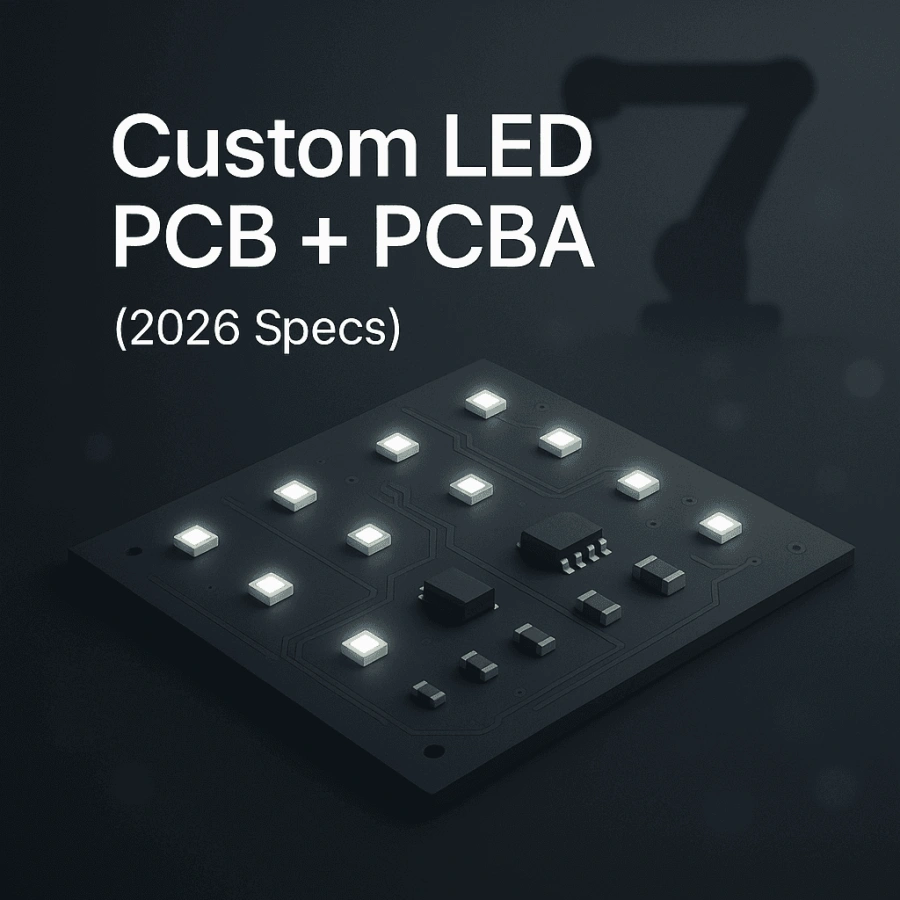
Es ist alles drum herum.
Die LED-Leiterplatte in Produktion geben. Dann einen separaten Bestückungsdienstleister finden. Dann jemandem hinterherlaufen, um Fragen zum LED-Binning, zu thermischen Problemen, seltsamem Flackern beim Dimmen oder dazu zu klären, warum sich die Leiterplatten von Charge zu Charge leicht unterscheiden. Dann die Verpackung. Dann eine Teständerung in letzter Minute. Und plötzlich hat man fünf Lieferanten, zwölf E-Mail-Verläufe und eine Frist, die sich um nichts schert.
Sprechen wir also über die einfache Variante.
Maßgeschneiderte LED-Leiterplatten und bestückte Leiterplatten aus einer Hand. Im Jahr 2026 bedeutet das im Grunde genommen: Sie senden die Gerber-Dateien und die Stückliste einmalig ein und erhalten die Leiterplatten zurück – bestückt, getestet und verpackt genau so, wie Ihre Produktionslinie oder Ihre Monteure sie tatsächlich benötigen.
Genau darauf basiert das Konzept von Philifast: Komplettlösungen aus einer Hand für Leiterplatten (PCB) und bestückte Leiterplatten (PCBA) für LED-Beleuchtungsprojekte, einschließlich Fertigung, Bestückung, Prüfung und Endverpackung. Wenn Sie bereits über Dateien verfügen, können Sie diese noch heute einsenden und erhalten umgehend ein schnelles, kostenloses Angebot.
Doch bevor Sie das tun: Hier erfahren Sie, worauf Sie achten sollten, was “2026-Spezifikationen” in der Praxis normalerweise bedeuten und welche Faktoren still und leise über die Zuverlässigkeit von LED-Platinen entscheiden.
Warum LED-Leiterplattenprojekte auf langweilige Weise scheitern
Die meisten Probleme mit LED-Platinen sind nicht dramatisch. Sie sind langwierig, kostspielig und irgendwie peinlich.
- Eine Metallkernplatine, die Wärme nicht so ableiten kann, wie du angenommen hast.
- Geringfügige Lötporen unter Hochleistungs-LEDs führen zu einem Anstieg der Ausfallrate im Einsatz.
- Farbabweichungen innerhalb einer Leuchte aufgrund einer zu lockeren Binning-Kontrolle.
- Steckverbinder, die im Labor “einwandfrei” funktionierten, sich aber nach Vibrations- oder Temperaturwechselprüfungen lockern.
- DFM-Probleme, die erst nach der Bestellung der Bauteile festgestellt wurden.
Und oft ist die Koordination das Kernproblem. Wenn Fertigung und Montage getrennt erfolgen, ist jeder Anbieter nur für einen Teil des Endergebnisses verantwortlich. Bei LED-Produkten umfasst das Endergebnis gleichzeitig thermische, optische und elektrische Aspekte. Diese sind miteinander verknüpft.
Deshalb ist der “One-Place”-Ansatz so wichtig. Sie brauchen einen Partner, der die Schichtaufbau, das Kupfer, die Lötmaske, die Schablone, den Reflow-Prozess, den Test und die Verpackung als Ganzes betrachtet – und nicht als einzelne Aufgaben.
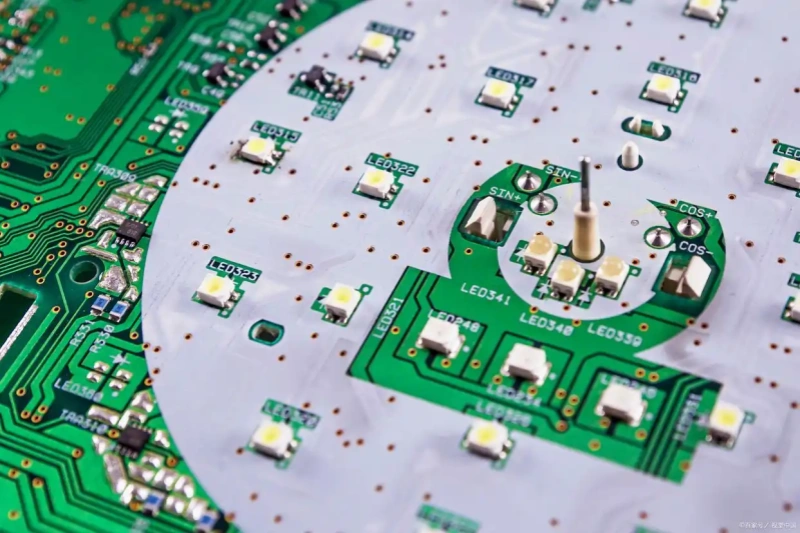
Was “Maßgeschneiderte LED-Leiterplatten + Bestückung aus einer Hand” (mindestens) umfassen sollte
Wenn von „One-Stop“ die Rede ist, kann das ganz unterschiedliche Bedeutungen haben. In der LED-Fertigung lautet die sinnvolle Definition:
- PCB-Fertigung (FR4, MCPCB, manchmal auch Hybrid-Laminate)
- Beschaffung von Bauteilen (oder zumindest eine eindeutige Unterstützung für in Kommission genommene Teile)
- SMT + Durchsteckmontage
- Steuerung des Reflow-Profils für LEDs
- Testen (elektrische, funktionale, optische und im Idealfall auch Einbrennoptionen)
- Endverpackung (ESD, Trays, Etikettierung, Konfektionierung, Kartonanforderungen)
- Dokumentation und Rückverfolgbarkeit (Chargennummern, Prozessprotokolle, Revisionsstände)
Philifast positioniert sich genau in diesem Bereich. Ein Lieferant, ein Prozessverantwortlicher, ein Zeitplan.
Technische Daten für LED-Platinen aus dem Jahr 2026, nach denen tatsächlich gefragt wird
“Spezifikationen für 2026” klingt zwar nach Marketing, entspricht aber im Grunde genommen den aktuellen Erwartungen der Käufer, da LED-Produkte mittlerweile ausgereift sind. Hier sind die Spezifikationsbereiche, die am häufigsten genannt werden.
1) Thermische Leistung – es geht um mehr als nur “es ist ein MCPCB”
Bei Geräten mit mittlerer bis hoher Leistung werden Sie nach dem Wärmeableitungsweg gefragt.
Zu den typischen Anfragen gehören:
- MCPCB-Aluminiumsockel, mit definierter dielektrischer Dicke und Wärmeleitfähigkeit
- Dicke des Kupfers Varianten (üblicherweise 1 oz, 2 oz, manchmal auch schwerer bei Schienen für hohe Stromstärken)
- Entwurf thermischer Durchkontaktierungen auf FR4-Leiterplatten (je nach LED-Bauteilabdruck durch Füllung oder Tenting)
- Ebenheitskontrolle (wichtig für die Optik, den Linsensitz und Wärmeleitmaterialien)
In der Praxis lautet die richtige Frage: Welche Sperrschichttemperatur werde ich bei meiner tatsächlichen Umgebungstemperatur und meinem tatsächlichen Ansteuerstrom nach zwei Stunden messen? Und lässt sich dies durch die Bauweise der Platine von Charge zu Charge reproduzieren?
2) Qualität der LED-Montage: Hohlräume, Ausrichtung und Reflow-Kontrolle
Wenn Sie 2835-, 3030-, 3535-, 5050-, CSP- oder Hochleistungsgehäuse verwenden, wirkt sich die Montagequalität direkt auf Folgendes aus:
- Konstanz des Lichtstroms
- Farbbeständigkeit im Laufe der Zeit
- Wärmewiderstand
- frühe Misserfolge
Ein guter Montageprozess sollte folgende Aspekte streng kontrollieren:
- Schablonendicke und Öffnungsgestaltung
- solder paste selection
- reflow profile tuned for the specific LEDs
- AOI settings that are LED aware (not just generic pass fail)
- ESD handling
This is where a combined PCB + PCBA vendor helps, because stencil, pads, mask, and reflow are planned together.
3) Dimming behavior and EMI basics
By 2026, customers assume dimming “just works”. But you still need the board to support it.
Common requirements:
- PWM dimming compatibility (layout that avoids visible flicker issues)
- analog dimming support where needed
- good grounding and return paths to reduce noise
- connector and cable considerations (because half the EMI issues show up off board)
Even if Philifast is building the board, you still want them to flag layout risks early, before you lock it.
4) Traceability, revision control, and production consistency
If you are selling into commercial lighting, industrial, automotive adjacent, or anything regulated, you will need traceability.
Not always full medical level traceability, but at least:
- revision matched fabrication and assembly
- date codes / lot records
- consistent materials and process control
One stop manufacturing simplifies that, because you are not reconciling two separate vendors’ records when something goes wrong.
Picking the right PCB material for LEDs (quick, practical)
There are three common directions.
FR4 LED boards
Good for:
- indicator LEDs, low to medium power
- control boards in luminaires (drivers, sensors, comms)
- cost sensitive designs
Watch out for:
- thermal bottlenecks under high power LEDs
- via and copper strategy for heat spreading
Aluminum MCPCB
Good for:
- high power LED modules
- COB holders, linear high density boards
- anything where heat is the main reliability limit
Watch out for:
- dielectric thermal conductivity and thickness
- isolation needs if you are doing high voltage designs
- mechanical constraints and mounting holes tolerances
Hybrid approaches
Sometimes you do:
- FR4 control + MCPCB LED engine
- or multi board systems connected by harness
This is where one supplier is really useful, because they can build both board types and kit them together.
Assembly details that matter more than people expect
A few “small” assembly choices show up later as failure rates or warranty claims.
Solder mask and reflectivity
For LED boards, solder mask is not just protection. It affects reflectance and appearance.
You may need:
- white solder mask with controlled thickness
- consistent color batch to batch
- clean silkscreen or no silkscreen in optical zones
Connectors and wire terminations
If installers touch it, it will be abused. Slightly.
So you want:
- robust connector footprints
- strain relief planning
- through hole anchors when needed
- clear polarity marking that survives handling
Conformal coating or protection
If your LED board goes outdoors or into humidity, coating becomes part of the BOM. If you need it, specify it early because it changes:
- rework process
- test points
- packaging
Fastener and mechanical stack compatibility
Mounting holes. Keepout zones for lenses. Screw boss alignment. These are not “PCB” issues alone. They are product issues. But your PCB partner should be used to asking for mechanical drawings and confirming what matters.
Testing for LED PCBA: what to ask for
If someone says “we test it”, ask what that means.
At minimum, you usually want:
- Open short testing for the PCB (pre assembly, when applicable)
- AOI post reflow
- Funktionsprüfung: correct LED channels, current draw, basic dimming behavior, polarity
- Visuelle Kontrolle: LED orientation, lens cleanliness if applicable, cosmetic requirements
Depending on the product, you might add:
- burn in / aging (helps catch early life failures)
- thermal cycling (for harsher environments)
- lumen and CCT checks (especially if you are selling “matching” fixtures)
- hipot / insulation tests (for higher voltage boards and safety compliance contexts)
Philifast offers testing as part of their one stop workflow. The best move is to tell them what your product needs, not just “do standard test”. Because LED products vary a lot.
You might also want to consider some insights shared in this blog which could provide further understanding on specific testing requirements and practices.
Final packaging is part of quality, not an afterthought
This sounds like logistics. It is actually reliability.
LED boards hate:
- ESD
- bent boards
- scratched solder mask in optical areas
- mixed revisions in one box (it happens more than you would think)
Good packaging can include:
- ESD bags
- trays or custom separators
- label control (PN, revision, quantity, lot)
- kitting hardware if you ship complete modules (screws, thermal pads, wires)
Philifast includes final packaging in their service scope, which is helpful if you are shipping direct to a contract manufacturer, an installer network, or Amazon style fulfillment where labeling matters.
What to send for a fast, accurate LED PCB + PCBA quote
If you want a quote that does not come back with a dozen questions, send a clean package.
Here is the practical list:
- Gerber files (or ODB++)
- NC drill files
- PCB stackup requirements
- For MCPCB: base thickness, dielectric thickness, thermal conductivity target if you have one
- BOM with manufacturer part numbers
- Pick and place file (centroid)
- Montagezeichnungen (polarity, special notes, connectors)
- Testing requirements (even if basic)
- Menge (prototype and expected production)
- Any critical quality notes
- Color consistency, cosmetic zones, no fingerprints on certain areas, etc.
Send that once, and your supplier can usually respond quickly and accurately. This is exactly the workflow Philifast is aiming for with the “send files today for a fast, free quote” promise.
A realistic “one stop” process (how it should feel)
This is what a good project flow looks like, not perfectly, but close.
- You send files.
- They do a DFM review and come back with a few questions that actually make sense.
- You confirm materials, finish, mask color, and any special LED assembly notes.
- They build prototypes.
- You test, maybe revise.
- They lock the build spec for production.
- They run batches, test, package, and ship on schedule.
If you are constantly explaining basic LED assembly concerns to your vendor, you picked the wrong vendor. You want someone who has seen the weird failure modes before.
When Philifast makes the most sense
There are a few situations where one stop PCB + PCBA is not just convenient, it is the difference between stable production and chaos.
- You are launching a new LED product and need prototypes fast, then small batches, then scale.
- You have an existing design but inconsistent quality and you want tighter process control.
- You are building multiple board types (LED engine + control) and want kitting and consistent labeling.
- You are tired of vendors blaming each other.
Philifast is positioned as a reliable LED PCB partner for exactly these LED lighting project needs: fabrication, assembly, testing, and final packaging.
Send your files, get a fast free quote
If you already have your design ready, do the simple thing.
Send Philifast your Gerber, BOM, and pick and place files, and ask for a quote for custom LED PCB + PCBA in one place. You will get a fast, free quote, and you can align on build specs before money gets wasted on the wrong materials or a sloppy assembly process.
Reliable LED boards are not magic. They are just the result of the right materials, the right process, and one team owning the outcome end to end.
If that is what you want for your next LED lighting project, Philifast is a solid place to start.
FAQs (häufig gestellte Fragen)
What are the common challenges in taking an LED lighting product from prototype to production?
The main challenges include coordinating multiple vendors for PCB fabrication, assembly, LED binning, thermal management, dimming issues, and packaging. This often leads to complex communication with several vendors and tight deadlines.
Why is having a single supplier for custom LED PCB and PCBA beneficial?
A single supplier manages fabrication, assembly, testing, and packaging together, ensuring better coordination. This unified approach addresses thermal, optical, and electrical aspects simultaneously, reducing risks like solder voiding, color shifts, and connector failures.
What services should a one-stop custom LED PCB + PCBA provider offer?
They should provide PCB fabrication (FR4, MCPCB), component procurement support, SMT and through-hole assembly, reflow profile control tailored for LEDs, comprehensive testing (electrical, functional, visual), final packaging with ESD protection and labeling, plus documentation and traceability including lot codes and process records.
What are the key ‘2026 specs’ buyers expect for LED boards?
Buyers expect detailed thermal performance specifications such as MCPCB aluminum base with defined dielectric thickness and copper thickness options; high-quality LED assembly with controlled solder voiding and precise alignment; reliable dimming behavior supporting PWM and analog dimming with EMI considerations; plus thorough traceability and revision control ensuring consistent production quality.
How does thermal management impact LED PCB design?
Thermal management is critical for mid to high power LEDs. It involves selecting proper MCPCB materials with specified dielectric thickness and thermal conductivity, choosing appropriate copper thickness (1 oz to heavier), designing thermal vias correctly on FR4 boards, and controlling board flatness to ensure consistent junction temperature under real operating conditions.
What factors affect LED assembly quality on PCBs?
Assembly quality depends on stencil thickness and aperture design, solder paste selection, reflow profile tuned specifically for the LED package type (e.g., 2835, 5050), AOI settings that detect LED-specific defects rather than generic faults, plus strict ESD handling procedures to maintain luminous flux consistency, color stability over time, reduce early failures and ensure optimal thermal resistance.

