

















Pregled
Chemical tin plating, often called immersion tin, is a surface finish used for SMT and chip packaging. It deposits a tin metal layer on copper by a chemical reaction. It works well for high-density and high-precision boards. It also suits fine traces, narrow pads, and small pitch PCBs. This finish is a green process that can replace Pb-Sn alloy plating. The deposited tin layer has fine crystal structure, a silver-white look, a flat surface, good solderability, and stable performance.
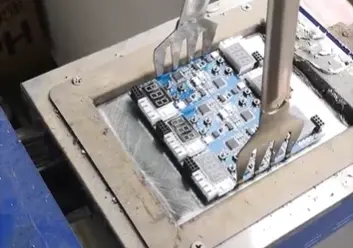
The principle of chemical tin plating is to change the chemical potential of copper ions so that stannous ions in the bath undergo a displacement reaction. Reduced tin metal deposits on the copper surface to form a tin layer. Metal complexes that adsorb on the immersion tin surface help catalyze tin ion reduction. This keeps the reduction reaction going and ensures the tin layer grows to the needed thickness.
Main Functions
Protect copper traces
Immersion tin forms a tin layer on copper traces. This layer protects copper from oxidation and corrosion. It helps extend the life of the printed circuit board.Improve soldering quality
The tin layer gives good soldering conditions. Solder joints become stronger and more reliable. This raises board performance and reliability.Enhance electrical properties
Tin can improve electrical performance. It can lower resistance and help with capacitance and inductance in some cases. This helps circuits run more efficiently.Increase wear resistance
Tin has decent wear resistance. It protects the board from damage caused by the external environment.
Application Scenarios
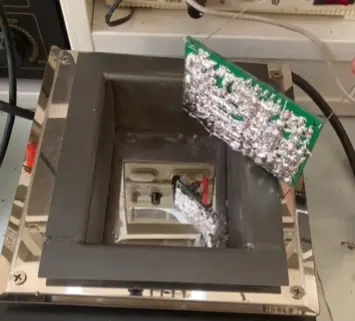
Immersion tin is low cost and simple to operate. It gives clear results. It is widely used in electronics that are cost sensitive and need reasonable soldering performance. Immersion tin also works for cases that need better environmental performance. Compared with immersion gold, immersion tin is more eco-friendly in many cases.
Difference Between PCB Spray Tin and Chemical (Immersion) Tin
Spray tin (PCB hot air solder leveling by spraying) costs a bit less. This method sprays tin only onto pads.
Chemical tin (immersion tin) deposits tin by chemical means on pad areas and includes the surface copper as well. It uses a thin tin layer, usually 10–30 µm, mainly to prevent oxidation and to improve SMT solder wetting. Its aim is the same as immersion gold or OSP. SMT requires the board to be tinned.
Spray tin uses physical methods to spray a layer of tin. The thickness is usually 50–150 µm, which is thicker. For SMT, no extra tining is needed. Soldering parts with molten solder is enough.
The compositions are different. Chemical tin uses tin salts in an acidic tin-containing solution. Spray tin usually uses tin alloys with lead or lead-free blends (pure tin is not used because of its high melting point).
Chemical tin, also called immersion tin, is a surface treatment for pad protection like OSP, immersion gold, and immersion silver. It mainly protects the surface copper foil at the pad sites.
Electroplating tin (plated tin) is a process used in PCB factories during two-copper procedures. It protects traces and plated-through holes before etching. After etching, the protective tin is removed and production moves on to solder mask printing. Plated tin is not seen in SMT assembly plants.
Process Flow
Process Notes
Acid clean and degrease / hole cleaning
GZ-2061 and GZ-2062 remove organic dirt, fingerprints, and copper oxides from pads and through holes. They prepare a clean copper surface for immersion tin. Materials used: GZ-2061 / GZ-2062.Activation
GZ-2066 protects the subsequent immersion tin bath. It reduces contamination and extends bath life. Material used: GZ-2066.Pre-plating
Pre-plating applies a thin tin layer on the copper base before immersion tin. This helps get a good final appearance and a dense tin layer. Material used: GZ-2069.Immersion tin
Immersion tin can replace spray tin. It deposits tin on the copper by displacement. The solderability can last more than six months. Material used: GZ-2069.
Product Characteristics
After immersion tin, boards get a good look and a uniform, dense tin layer with strong adhesion. Typical thickness is 0.8–1.2 µm. The tin layer shows no whiskers or dendritic crystals.
Equipment and Tank Material Requirements
| Stavka | Through-hole tanks | Black-hole tanks | Micro-etch tanks |
|---|---|---|---|
| Tank body | PE, PP, 304 or 316 SS | PP, PVC, 316 SS | PE, PP, rigid PVC |
| Heaters | 304 or 316 SS or Teflon-coated | 316 SS | 316 SS or titanium heaters |
| Filtration | Continuous filtration | — | Continuous filtration |
| Agitation | Mechanical swing, vibration | Mechanical swing, vibration | Mechanical swing, vibration, air agitation |
Process Control
1. Bath startup (making the solution)
| Tank name | Chemical | Tank volume | Startup concentration | Startup amount |
|---|---|---|---|---|
| Degrease | GZ-2061 | 100 L | 50 mL/L | 5 L |
| GZ-2062 | 100 L | 2 g/L | 0.2 Kg | |
| H₂SO₄ | 100 L | 50 mL/L | 5 L | |
| Micro-etch | H₂SO₄ | 100 L | 25 mL/L | 2.5 L |
| GZ-2065 | 100 L | 20 g/L | 2 Kg | |
| SPS | 100 L | 100 g/L | 10 Kg | |
| Activation | GZ-2066 | 100 L | 150 mL/L | 15 L |
| Pre-plating | GZ-2069 | 100 L | 100% | 100 L |
| Immersion Tin A | GZ-2069 | 100 L | 100% | 100 L |
| Immersion Tin B | GZ-2069 | 100 L | 100% | 100 L |
2. Operating Conditions
| Bath | Analysis item | Control range | Analysis freq | Temp | Time (min) | Filtration |
|---|---|---|---|---|---|---|
| Degrease | H₂SO₄ | 40–50 mL/L | once/day | 40–50℃ | 3–5 | Yes |
| Micro-etch | H₂SO₄ | 20–25 mL/L | once/day | 20–30℃ | 1–2 | Yes |
| SPS | 80–120 g/L | once/day | — | — | — | |
| Micro-etch rate | 0.5–1.5 µm | once/shift | — | — | — | |
| Cu²⁺ | <20 g/L | once/day | — | — | — | |
| Activation | Acid eq. | 0.1–0.2 N | once/day | 22–32℃ | 1–2 | Yes |
| Pre-plating | Acid eq. | 2.0–4.0 N | once/day | 36–40℃ | 1–2 | Yes |
| Sn content | 12–16 g/L | — | — | — | — | |
| Immersion Tin A | Acid eq. | 2.0–4.0 N | once/day | 50–60℃ | 5–10 | Yes |
| Sn content | 12–16 g/L | once/day | — | — | — | |
| Immersion Tin B | Acid eq. | 2.0–4.0 N | once/day | 68–72℃ | 10–12 | Yes |
| Sn content | 12–16 g/L | once/day | — | — | — | |
| Tin thickness | 0.8–1.2 µm | once/day | — | — | — |
3. Bath Replenishment and Replacement Rules
| Bath | Chemical | Replenish | Replace standard | Filter change |
|---|---|---|---|---|
| Degrease | H₂SO₄ | Add by analysis | Replace when treat 40–50 m² of boards | Change filter weekly |
| Micro-etch | H₂SO₄ | Add by analysis | Replace when Cu²⁺ > 20 g/L | Change filter weekly |
| SPS | Add by analysis | — | — | |
| Activation | Acid eq. | Add by analysis | — | Change filter weekly |
| Pre-plating | — | Add by analysis | Replace when Cu²⁺ > 8 g/L | Change filter every 2 days |
| Sn content | — | — | — | |
| Immersion tin | Acid content | Add by analysis | Replace when Cu²⁺ > 8 g/L | Change filter every 2 days |
| Sn content | — | — | — |
4. Storage Conditions
GZ-2001, GZ-2002, GZ-2004: avoid direct sunlight. Shelf life two years. Store at -5℃ to 40℃.
GZ-2003: store at 3℃ to 30℃.
5. Wastewater Treatment
Clean tank waste: neutralize with acid then discharge per environmental rules.
Through-hole tank waste: neutralize with acid then discharge per rules.
Activation tank waste: neutralize then discharge per rules.
Immersion tin tank waste: neutralize with alkali then discharge per rules.
Micro-etch waste: recover copper sulfate by electro-purification and recrystallization. Then neutralize with alkali and discharge per rules.
Reagent Analysis Methods
1. H₂SO₄ in micro-etch bath
Reagents
NaOH standard solution [c(NaOH)=1 mol/L]
0.1% methyl orange indicator
Steps
Take 5 mL of tank solution into a 250 mL conical flask.
Add 50 mL pure water and 2–5 drops methyl orange.
Titrate with NaOH (1 mol/L) until color changes from red to yellow. Record volume V.
Calculation
H₂SO₄ (mL/L) = 5.43 × c × V
c = actual concentration of NaOH (mol/L)
V = volume of NaOH used (mL)
Add
H₂SO₄ (mL) = (set value – analysis value) × tank volume (L)
2. SPS in micro-etch bath
Reagents
Sodium thiosulfate standard solution [c(Na₂S₂O₃)=0.1 mol/L]
1% starch indicator
KI
20% H₂SO₄
Steps
Take 2 mL of tank solution in a 250 mL flask.
Add 50 mL pure water, 5 mL 20% H₂SO₄, 2 g KI, keep in dark for 20 min.
Titrate with Na₂S₂O₃ until light yellow. Add a few drops starch indicator.
Continue titration until colorless. Record volume V.
Calculation
SPS (g/L) = 60 × c × V
Add
Total SPS (g) to add = (set value – analysis value) × tank volume (L)
3. Cu²⁺ in micro-etch bath
Reagents
EDTA-2Na standard solution [c=0.05 mol/L]
pH=10 ammonia-ammonium chloride buffer
0.1% PAN indicator
Steps
Take 1 mL tank solution into a 250 mL flask.
Add 100 mL pure water, 20 mL pH=10 buffer, 5 drops PAN.
Titrate with EDTA-2Na until grass green. Record volume V.
Calculation
Cu²⁺ (g/L) = 63.5 × c × V
Control range: Cu²⁺ < 30 g/L
4. H₂SO₄ in cleaning / through-hole agent
Same as micro-etch H₂SO₄ test. Control range: 40–50 mL/L.
5. Acid eq. in activation
Reagents: NaOH standard 0.1 mol/L, 0.1% bromophenol green indicator
Method: Take 5 mL sample, add 150 mL pure water and indicator, titrate with NaOH 0.1 mol/L to blue end point.
Calculation: Acid eq. = 0.02 × V. Control range: 0.1–0.2 N.
Immersion Tin Bath Analysis
1. Acid equivalent analysis
Reagents: NaOH 1 mol/L, 0.1% phenolphthalein indicator
Method: Take 2 mL sample, add 100 mL pure water and indicator, titrate with NaOH until colorless turns red. Record V.
Calculation: Acid eq. = 0.5 × c × V.
2. Tin content analysis
Reagents: EDTA-2Na 0.05 mol/L, dimethylphenol orange indicator (mix 100 mg dimethylphenol orange with 10 g KNO₃), pH 4.5 acetate buffer.
Method: Take 5 mL sample, add 25 mL pH 4.5 buffer and 100 mL pure water. Mix and add about 50 mg indicator. Titrate with EDTA-2Na until color changes from pink to yellow. Record V.
Calculation: Sn (g/L) = 24 × c × V.
3. Cu²⁺ in immersion tin bath
Same EDTA method as above. Control Cu²⁺: use formula Cu²⁺ (g/L) = 63.5 × c × V.
Quality Control
Tin thickness by gravimetric method
Take a 5 × 5 cm² double-sided copper-clad board without holes. Bake at 120℃ for 15 min. Cool 15 min. Weigh precisely = W1.
After degrease and micro-etch, bake at 120℃ 15 min. Cool 15 min. Weigh = W2.
After immersion tin, bake at 120℃ 15 min. Cool 15 min. Weigh = W3.
Micro-etch thickness (µm) = 22.42 × (W1 – W2).
Immersion tin thickness (µm) = 386.13 × (W3 – W2).
Where W1 = weight before micro-etch (g)
W2 = weight after micro-etch (g)
W3 = weight after tin plating (g)
22.42 and 386.13 are conversion factors.
Special Notes
Use weight method or X-ray to measure tin thickness. Keep thickness at 0.8–1.2 µm to ensure solderability and storage life.
Before solder mask printing, roughen the copper surface with a coarse process and use high quality ink for solder mask. This ensures the solder mask can resist immersion tin chemicals.
Troubleshooting and Remedies
Problem: Tin thickness too low
Possible cause 1: Tank temperature too low.
Remedy: Check heater. Make sure temperature is in process range before plating boards.
Possible cause 2: Tank acidity too high.
Remedy: Add pure water to adjust acidity.
Possible cause 3: Tin content low.
Remedy: Add GZ-2069-B to raise tin level.
Possible cause 4: Micro-etch rate low.
Remedy: Raise micro-etch rate within process range.
Problem: Tin surface darkens
Possible cause 1: Poor tank filtration.
Remedy: Check filter system. Replace filter. Filter at 40℃ for 2–4 hours.
Possible cause 2: Tank acidity too high.
Remedy: Add pure water to adjust acidity.
Possible cause 3: Micro-etch speed too low.
Remedy: Check H₂SO₄, Na₂S₂O₈, Cu²⁺ levels in micro-etch. Keep them normal.
Possible cause 4: Rinse not clean after tin plating.
Remedy: Improve rinsing or replace rinse tank.
Problem: Uneven tin color
Possible cause 1: Tank specific gravity too high.
Remedy: Dilute solution and analyze.
Possible cause 2: Micro-etch speed too low.
Remedy: Check micro-etch H₂SO₄, Na₂S₂O₈, Cu²⁺.
Possible cause 3: Contamination in pre-plate or immersion tin bath.
Remedy: Replace pre-plate or immersion tin bath.
Possible cause 4: Copper surface abnormal.
Remedy: Clean copper surface.
Problem: Poor solderability
Possible cause 1: Cu²⁺ in tin tank too high.
Remedy: Replace tin bath solution.
Possible cause 2: Rinse not clean after tin plating.
Remedy: Improve rinsing or replace rinse tank.
Possible cause 3: Contamination during air drying.
Remedy: Clean drying section and blower.