
















A PCB manufacturer normally needs four things to prepare an accurate quote: complete manufacturing data, the board’s technical specifications, the required quantity, and delivery or compliance requirements. For a bare-board quotation, this usually means Gerber or equivalent fabrication files plus details such as layer count, finished dimensions, thickness, copper weight, material, surface finish, and special processes. A PCB assembly quote also needs a BOM, component placement data, assembly instructions, sourcing rules, and test requirements.
The more complete the request, the fewer assumptions a manufacturer has to make. A missing stack-up, unclear copper weight, incomplete BOM, or unspecified delivery quantity can lead to a provisional price, clarification cycle, or revised quotation. The checklist below separates PCB fabrication information from PCBA information so you can send the right package for the service you need.
What information does a PCB manufacturer need first?
Start with a concise project summary and identify the quotation scope. A manufacturer needs to know whether you want bare PCBs, assembled PCBAs, or both; whether the build is a prototype, pilot run, or production order; and how many boards you need at each stage.
| Information category | What to provide | Why it affects the quote |
|---|---|---|
| Scope | Bare PCB fabrication, PCB assembly, or turnkey PCB and PCBA | Establishes which processes, materials, purchasing, and tests are included |
| Manufacturing data | Gerber X2, ODB++, IPC-2581, or the format agreed with the fabricator; drill data and drawings where required | Defines the physical artwork, holes, outline, and other build features |
| Board specification | Layers, finished size, thickness, material, copper, finish, mask, legend, and special requirements | Determines material selection, process routing, and engineering review |
| Quantity and build stage | Prototype, engineering build, pilot, or production quantity; required panel or board count | Affects setup, purchasing, panelization, scheduling, and unit-cost calculation |
| 配送 | Required arrival date, shipping destination, packaging, and any staged deliveries | Allows the supplier to evaluate scheduling and logistics |
| Quality and compliance | Applicable acceptance criteria, regulatory needs, traceability, inspection, and test requirements | Defines additional controls, documentation, and test work |
The manufacturer may be able to infer some values from the files, but inferred data should not replace an explicit requirement. State the values that matter to your design and ask the supplier to identify any assumptions in the quotation.
What PCB manufacturing files are needed for a quote?
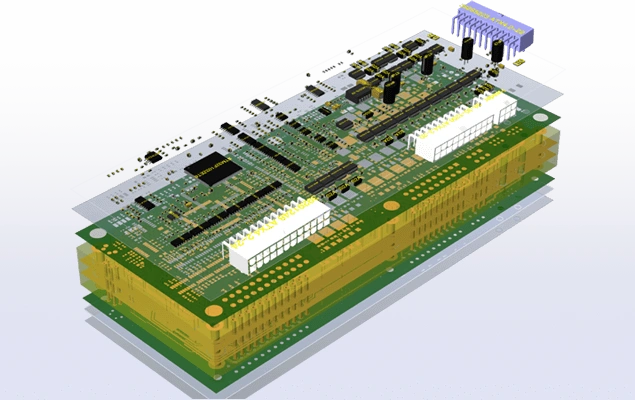
For a fabrication quote, provide a complete set of current board manufacturing files, not only a screenshot or native CAD file. Gerber files are common because they describe individual board layers and features in a format many fabricators can import. ODB++ and IPC-2581 can package more design information, but the accepted format depends on the supplier’s workflow.
The exact file list varies with the EDA tool and fabricator. A typical package includes:
- copper artwork for every copper layer;
- solder-mask openings for each side;
- top and bottom silkscreen or legend artwork;
- board outline and routed or scored features;
- NC drill data, including plated and non-plated holes when applicable;
- slots, cutouts, or other routed features;
- a fabrication drawing with notes and tolerances; and
- a stack-up or impedance table when the board has controlled construction requirements.
The files should describe the same revision and use the same origin, units, and layer naming. Include a readme or fabrication drawing when a feature is not obvious from the artwork. Philifast’s PCB design workflow from schematic to Gerber files explains how design data becomes manufacturing output. A separate DFMレビュー can identify manufacturability questions before the quote is finalized.
Can a manufacturer quote from Gerber files alone?
Often, Gerber and drill files are enough for a preliminary bare-board quote, but they may not define every commercial or technical requirement. The fabricator may still need the finished quantity, board thickness, material family, copper weights, surface finish, solder-mask color, impedance targets, tolerances, and special processes. If the files contain incomplete or conflicting information, the quote will be based on assumptions or returned for clarification.
Native design files are not always required for a standard quotation, and they should not be sent in place of released manufacturing output unless the supplier specifically requests them. For production, use the file format and revision-control method agreed with the manufacturer.
What PCB specifications affect the quotation?
Board specifications affect a PCB quote because they change material consumption, process steps, equipment requirements, yield risk, or inspection. The following fields should be stated when they matter to the design.
| PCB specification | What to state | Quotation relevance |
|---|---|---|
| Layer count | Number of copper layers, including any special sequential-build requirement | Changes lamination, imaging, plating, drilling, and inspection steps |
| Finished dimensions | Board length and width, outline tolerance, and whether dimensions refer to individual boards or a panel | Affects material utilization, panelization, routing, and shipping |
| 板厚 | Finished thickness and tolerance, including whether local thickness features apply | Determines material construction and fabrication controls |
| 素材 | FR-4 or another laminate family; Tg, low-loss, halogen-free, metal-core, flexible, or other requirements where applicable | Different materials have different costs, process windows, and qualification needs |
| Copper weight | Inner and outer copper requirements, stated as the required specification or finished thickness where appropriate | Affects copper processing, current capacity, etching, plating, and thermal behavior |
| 表面仕上げ | HASL, lead-free HASL, ENIG, OSP, immersion tin, immersion silver, or another specified finish | Adds different chemical or solder-coating processes and material costs |
| Solder mask and legend | Sides, color, clearance or dam requirements, legend color, and any cosmetic requirements | Affects material choice, imaging, registration, and acceptance review |
| インピーダンス | Controlled nets, target impedance, tolerance, reference plane, and required stack-up or coupon | Requires stack-up engineering, trace geometry control, and verification planning |
| Holes and vias | Through vias, blind or buried vias, microvias, filled or capped vias, via-in-pad, slots, and hole tolerances | Special drilling, plating, filling, or inspection can add process steps |
| Edge and mechanical features | Edge plating, castellations, countersinks, cutouts, scoring, bevels, or press-fit requirements | Requires dedicated routing, plating, or mechanical operations |
| Electrical and visual tests | Bare-board electrical test, coupons, dimensional checks, and acceptance criteria | Adds test preparation, fixtures, inspection, and documentation |
Do not treat copper weight, copper thickness, and finished plated thickness as interchangeable terms. State the convention used in the drawing or purchase order, especially for heavy-copper or tightly controlled boards. Likewise, surface finish protects exposed copper pads; it is different from solder mask, which covers selected surface areas.
For material selection, see Philifast’s FR-4 PCB material guide. For designs with controlled impedance, define the electrical target and stack-up expectations before the quotation is finalized; a layer count alone does not specify impedance.
If the customer invokes a board performance specification, name the required revision in the request. For example, IPC-6012F addresses qualification and performance requirements for rigid printed boards; the applicable revision and any customer-specific criteria still govern the quote.
Does quantity affect a PCB quotation?
Yes. Quantity affects setup allocation, material purchasing, panel utilization, production scheduling, and the unit cost quoted for the job. State both the number of finished boards and, if known, the expected number of repeat orders. A prototype quantity and a production quantity may use the same design but require different purchasing and process planning.
Tell the manufacturer whether the quantity is:
- the number of individual boards;
- the number of panels;
- the number of assembled units;
- a split across different revisions or variants; or
- an initial build followed by a forecast.
Do not assume that a quote for one quantity can be multiplied directly for another. Component minimum order quantities, panel yield, setup, test fixtures, and material availability can change the calculation.
What information is needed for PCB assembly?
A PCBA quotation needs the bare-board definition plus the information that tells the assembler which components to install, where to install them, and how the completed assembly will be accepted. Gerber files alone do not identify the full component population.
| Assembly information | What to provide | Why it matters |
|---|---|---|
| Bill of materials (BOM) | Reference designators, quantities, manufacturer part numbers, approved alternates, and do-not-populate positions | Defines the parts to purchase or install |
| Component sourcing | Customer-supplied, kitted, or supplier-sourced parts; approval and substitution rules | Determines purchasing scope, lead-time review, and responsibility for alternates |
| Pick-and-place data | X/Y position, rotation, side, reference designator, and coordinate origin | Drives automated placement programming |
| 組立図 | Polarity, orientation, mechanical constraints, connector details, and special instructions | Resolves information not safely inferred from placement data |
| Bare-board data | Released Gerbers or equivalent, drill data, outline, finish, and board revision | Ensures the assembler receives the correct PCB |
| Assembly quantity | Number of boards, variants, build stages, and expected repeats | Supports material planning and line scheduling |
| Process requirements | SMT, through-hole, mixed technology, selective or wave soldering, hand assembly, cleaning, or coating where required | Defines the assembly route and labor or equipment needs |
| Inspection and test | AOI, X-ray, ICT, flying probe, functional test, programming, fixtures, and records | Defines verification work and acceptance deliverables |
| Packaging and handling | Moisture-sensitive device controls, ESD handling, depanelization, labels, and packaging | Prevents an incomplete delivery specification |
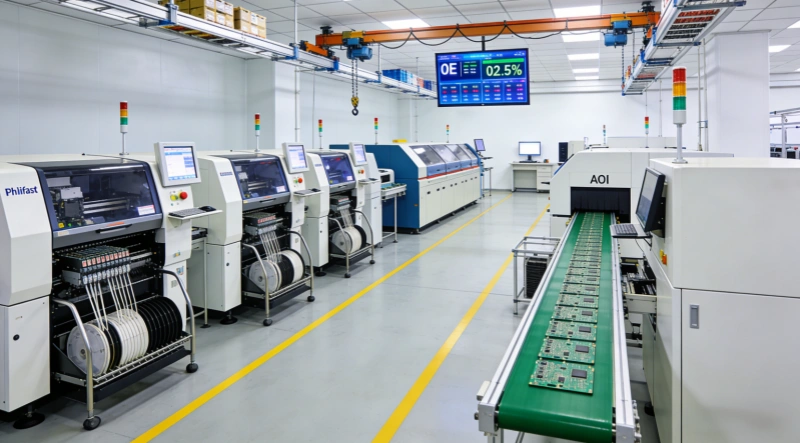
Philifast’s PCBA quote-file guide covers the document package in more detail. For component decisions, the parts-sourcing guide for PCB assembly explains why approved manufacturer part numbers and substitute rules belong in the request. The PCB assembly service overview shows why the quoted scope should identify sourcing, fabrication, placement, soldering, and testing separately.
What is the difference between a fabrication quote and an assembly quote?
A PCB fabrication quote prices the bare board: its layers, materials, copper, holes, finish, dimensions, quantity, and required tests. A PCB assembly quote prices the work of obtaining or receiving components, placing them, soldering them, inspecting the assembly, and performing any agreed tests or programming. A turnkey request combines both scopes, but the quotation should state whether the supplier includes board fabrication, component sourcing, assembly, and testing.
What happens if information is missing?
Missing information does not always prevent a quote, but it increases assumptions and the chance of revision. A manufacturer may return questions, provide an estimate marked subject to review, or quote only the defined portion of the work.
Common consequences include:
- Assumptions in the quote: The supplier selects a default material, finish, mask color, or test scope that may not match the design intent.
- Engineering clarification: CAM or manufacturing engineers request missing drawings, stack-up data, hole definitions, or approval for an alternate component.
- Quotation changes: The price or schedule changes after the missing requirement is resolved.
- Procurement delays: An incomplete BOM or unclear substitution rule prevents component purchasing.
- Production risk: An ambiguous revision, outline, or assembly instruction can result in the wrong board or population.
Ask the manufacturer to list open assumptions and exclusions. That makes it easier to compare quotations on the same scope and prevents a low preliminary number from being mistaken for a fully defined production price.
Philifast — PCB & PCBA Quotation Support
Our team helps you compile the right files and specs for an accurate manufacturing quote.
How to prepare a PCB quote request
Use this checklist before sending the request:
- State whether you need bare PCB fabrication, PCB assembly, or turnkey PCB and PCBA.
- Identify the board revision and the required quantity for each revision or variant.
- Attach released Gerber, ODB++, or IPC-2581 data and NC drill files.
- Include the fabrication drawing, stack-up, impedance table, and special-process notes where applicable.
- State finished dimensions, thickness, material, copper requirements, surface finish, solder mask, and legend.
- Identify controlled impedance, via, edge-plating, castellated-hole, slot, scoring, or other special requirements.
- For PCBA, attach the BOM, pick-and-place file, assembly drawings, and approved-alternate rules.
- State who supplies components and bare boards, and how shortages or substitutions are approved.
- Define inspection, electrical test, functional test, programming, traceability, and documentation requirements.
- State prototype or production stage, delivery date, destination, packaging, and any staged-delivery needs.
For high-density or unusual designs, include a short list of known risks, such as fine-pitch packages, thermal requirements, controlled impedance, or restricted materials. A focused note helps the manufacturer route the request to the right engineering review without replacing the formal files.
よくあるご質問
What files does a PCB manufacturer need for a quote?
For bare-board fabrication, provide Gerber, ODB++, or IPC-2581 data, NC drill files, the board outline, and a fabrication drawing or specification. Add stack-up and impedance information when required. The files should be complete, current, and tied to the same revision.
Can a PCB manufacturer quote without final design files?
It can provide a budgetary estimate from dimensions, layer count, materials, and process assumptions, but a production-ready quotation normally requires released manufacturing data. The estimate should be labeled provisional because missing geometry and special features can change the scope.
Do I need a BOM for a PCB fabrication quote?
No. A BOM lists components and is normally required for PCB assembly, not bare-board fabrication. You need a BOM when the manufacturer is expected to source or install components on the PCB.
What PCB specifications affect the price most?
The main drivers are usually the board’s construction and process complexity, including layer count, dimensions, material, copper requirements, thickness, holes and vias, surface finish, quantity, special tolerances, and test scope. The relative impact depends on the supplier and the design, so request a quote using the complete specification.
What is needed for a PCBA quote?
Provide the bare-board files plus a BOM, pick-and-place data, assembly drawings, component-sourcing instructions, assembly quantity, and inspection or test requirements. Also state whether the supplier provides the boards and components or receives them from you.
Should prototype and production quotes use the same information?
They should use the same released design definition, but the commercial request should identify the build stage and quantity. Prototype assembly may need engineering review and smaller purchasing assumptions, while production planning may add repeat-order, traceability, panelization, and test requirements.
How can I compare PCB manufacturer quotations fairly?
Compare quotations only after aligning board revision, quantity, materials, copper, finish, tolerances, special processes, test scope, component sourcing, delivery terms, and exclusions. Ask each supplier to identify assumptions so a lower price is not simply based on a narrower scope.
Philifast — Your PCB Manufacturing Partner
From accurate quotes to reliable production, we support your PCB and PCBA needs worldwide.
結論
An accurate PCB manufacturer quote starts with a complete, revision-controlled data package and a clear statement of scope. For bare PCB fabrication, provide the board manufacturing files and specifications. For PCB assembly, add the BOM, placement data, assembly instructions, sourcing rules, and test requirements. State quantity, build stage, delivery needs, and any special processes up front. This gives the manufacturer enough information to price the actual work instead of pricing an assumption.