
High Volume PCB Manufacturing for Ongoing Production
Bring your proven PCB design into the quantities your product needs. FLJ PCB connects custom board construction, fabrication and inspection with a production plan for your current order and the batches that follow.
Discuss your production order ↗
What is high volume PCB manufacturing?
High volume PCB manufacturing produces custom bare circuit boards for larger production orders or continuing product demand. It focuses on a defined board construction, repeatable fabrication and agreed acceptance across production batches. The practical volume depends on the board and the supply plan, rather than one universal piece count.
This service covers the bare PCB before components are fitted. Whether you are moving from an approved prototype or sourcing an established production design, our Shenzhen manufacturing team can review the next order with you.
Production PCB capabilities for your board construction
Our published fabrication scope includes rigid and multilayer PCBs alongside HDI, flex, rigid-flex, heavy copper, RF and metal-based constructions. We review the features needed by your circuit and confirm the suitable production route with the quotation.
| ویژگی | Published scope | For your production order |
|---|---|---|
| General rigid-board layers | 1–30 layers | Layer count, material and via structure reviewed together. |
| Line / space at 0.5 oz copper | 3 / 3 mil | Geometry changes with the copper and process route. |
| General finished copper scope | Outer up to 8 oz; inner up to 6 oz | Connect copper weight with clearances, holes and construction. |
| Controlled impedance tolerance | ±5 Ω below 50 Ω; ±10% at or above 50 Ω | Confirm target, stackup, measurement and reporting. |
These are manufacturing references, with their stated conditions. The combination of features and production quantity is reviewed for the actual board. Detailed thickness, hole, outline and specialist limits are available in the capability pages.
Bring your validated design into production
Start with the design you want to manufacture and tell us where it has reached. A board already approved for use can be reviewed for production directly. For a new construction, revised design or supplier transfer, we can work through the details that need confirmation.
Connect the specification
Share the board identity, current revision and available fabrication information. If an earlier build is the reference, include its order details or approved drawing.
Review the production build
Check the construction, delivery panel and inspection needs against the intended quantity. Discuss representative boards or first-build measurements when the design or manufacturing route has changed.
Agree the production basis
Confirm the files and manufacturing choices for this order. A short change record helps distinguish an updated design from a repeat of the approved revision.
The first-build review can focus on the features affected by a change, such as outline, holes, stackup or impedance. We will help connect those checks with your next manufacturing or assembly step.
Materials and stackups that stay consistent between batches
A production specification records more than “FR4” and a layer count. Material designation, layer arrangement, finished copper, dielectric spacing, total thickness and surface finish describe the board your team has approved.
For controlled impedance PCBs, the construction used in the calculation needs to represent the finished board. Prepreg thickness after pressing and finished copper can differ from the incoming material dimensions. We review the stackup and trace geometry together with the impedance target.
If availability or a new requirement calls for another material, we will discuss the proposed construction with your team. Matching one property, such as Tg, is only part of that review. Keeping the agreed material and stackup connected to the order makes later batches easier to compare.
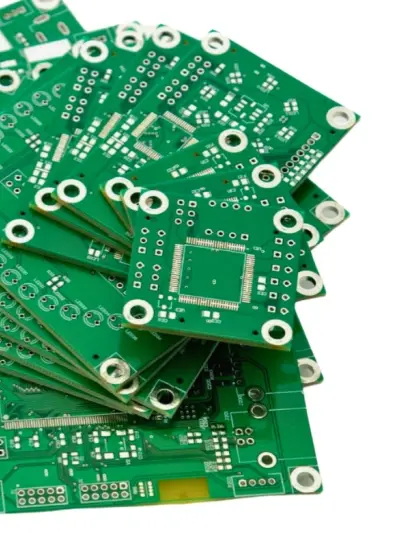
Fabrication controls behind repeatable PCB production
The production route follows your board’s structure. A through-hole multilayer board, an HDI build and a metal-based board can need different sequences and checks. The useful question is how that route controls the features that matter to your product.
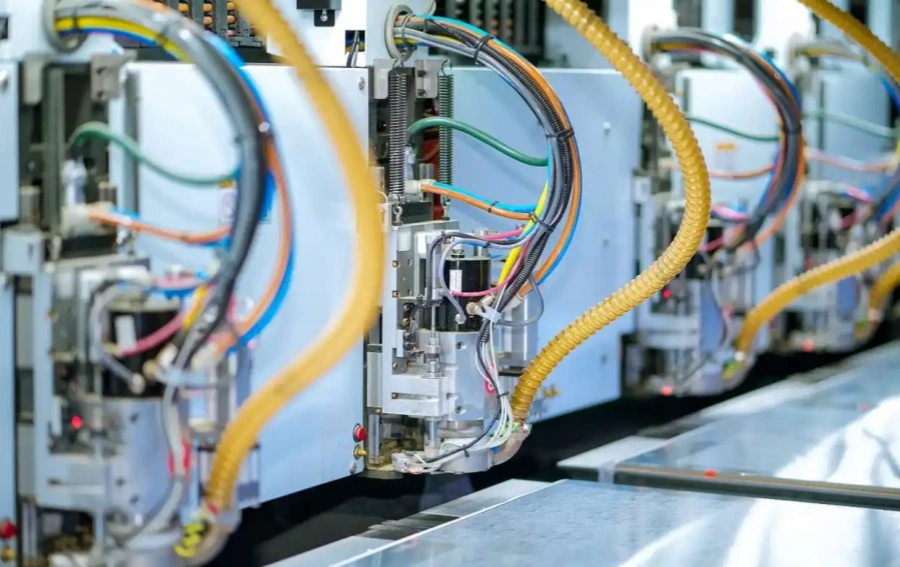
Drilling & registration
Hole position, diameter and depth follow the board construction and fabrication data.
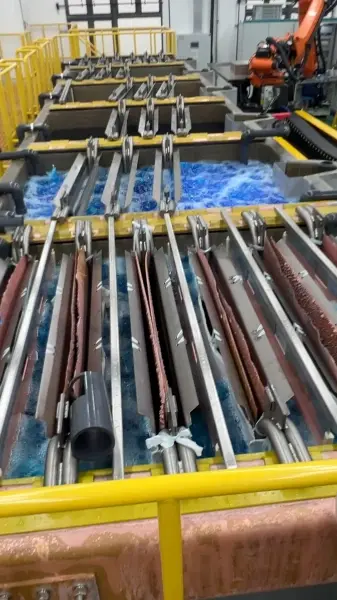
Plating & process route
Hole and surface copper are considered with the selected construction and downstream checks.
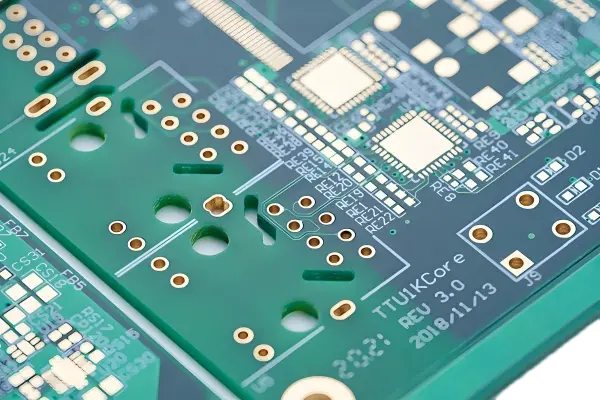
Copper pattern & inspection
Copper-pattern inspection addresses the circuitry before the board moves through subsequent stages.
Layer alignment, drilled features, copper thickness, finished surfaces and dimensions each need the appropriate process checks. For a specialist construction, explain which features are critical so our engineering team can review the fabrication and inspection approach with you.
Electrical testing and production lot acceptance
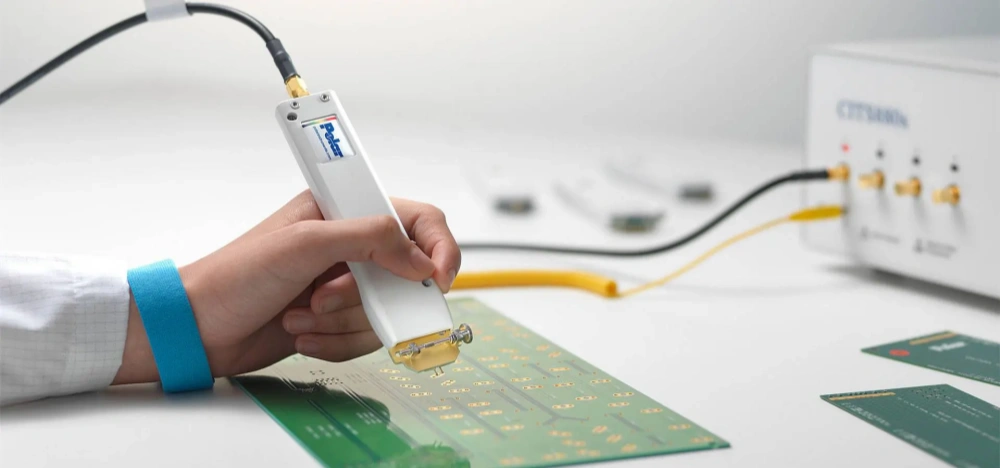
Bare-board electrical testing verifies the intended connections and isolation between networks. Physical inspection addresses other features, including holes, profile, solder mask, markings and finished surfaces. Together, the agreed checks give your team a clearer account of the delivered board.
We review the electrical test method and coverage around your design and production plan. Flying-probe and fixture-based approaches have different preparation and handling needs. The choice also considers board access, the requested checks and repeat-order use.
Electrical verification
Agree the network checks, test data and any specific electrical requirements. Functional evaluation belongs to the assembled circuit and its test plan.
Physical & batch checks
Discuss dimensions, workmanship, impedance coupons or structural checks as applicable. Some verification uses samples or test pieces; its scope is defined with the order.
Acceptance & records
Identify the applicable specification, revision, acceptance class and reporting. IPC-A-600 and IPC-6012 address printed boards; company system certificates serve a separate purpose.
A statement of electrical test coverage describes that test. It does not mean every board undergoes every laboratory test. Tell us which evidence your supplier-qualification or receiving process needs and we can connect it with the agreed inspection plan.
A supply plan for the quantities you need
Share the immediate order quantity, your required receipt date and what you expect to need afterward. That gives our team a basis for discussing material readiness, fabrication and transport around your production schedule.
A forecast helps planning; each purchase order or agreed release defines the supply commitment. If separate deliveries, advance material purchasing or a longer supply arrangement would help, bring those needs into the quotation discussion.
Manufacturing completion and shipping time are separate parts of the plan. FLJ can discuss DHL, FedEx, UPS or your nominated freight forwarder. Quantities are confirmed as individual boards or complete delivery panels so the order and receiving count match.
Production pricing built around the agreed specification
A useful volume PCB fabrication quote gives you a comparable manufacturing scope: the board construction, quantity, electrical and physical checks, documentation and delivery arrangement. Engineering preparation, testing and any dedicated tooling are addressed with the quoted build.
Compare the same board
When evaluating quantities or suppliers, keep the material, stackup, copper, finish and acceptance scope aligned. A design change proposed for cost should be reviewed with your engineering team.
Separate current and repeat needs
Explain whether the request is one batch or an ongoing program. Confirm the preparation charges, repeat-build assumptions, quotation validity and material availability relevant to that plan.
Send an estimated volume if the final quantity is still open. We can review the choices with you before you commit to the purchase specification.
Discuss your production quotationManufacturing evidence for supplier qualification
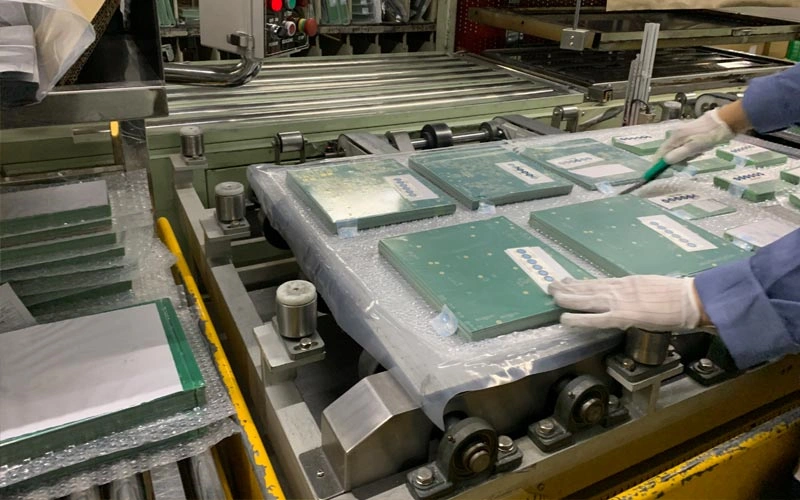
FLJ PCB is the PCB manufacturing and assembly brand of Shenzhen Philifast Electron Co., Ltd. For a production sourcing review, our team can help you connect the board construction with relevant manufacturing, inspection and company information.
Explore the factory and equipment pages for the process areas, and discuss the current certificates applicable to the supplying entity, site and scope. Material declarations and any finished-product market approvals are addressed separately.
Share the records your procurement or receiving team needs, such as a board specification, inspection report, batch identification or agreed conformity statement. We can review what is applicable to your order.
Share your production PCB project
Send the files you have and describe the production order. The current board revision, requested quantity and target date are helpful starting points. A fabrication drawing, stackup or earlier order reference can explain the specification; we will follow up on details that are still open.
If you need populated boards, include your available BOM and assembly information. Bare-board production and PCB assembly can be discussed together with their respective inspection and test needs.
High volume PCB manufacturing FAQs
What quantity is considered high volume PCB manufacturing?
There is no universal threshold for every board. Layer structure, materials, manufacturing route and repeat demand affect the practical production plan. Share your requested quantity and expected follow-on needs so FLJ can review the order in its actual context.
Can a proven prototype move directly into production?
An approved design is a useful starting point. We review the production specification, quantity, delivery format and acceptance needs with you. Representative boards or first-build checks can be discussed when the construction, revision or manufacturing route has changed.
Can you review a design already made by another supplier?
Yes. Send the current fabrication information and any approved stackup, drawing or inspection requirements you have. An earlier physical sample can help explain features, but the agreed files and specification define the new production order.
How are material or stackup changes handled between batches?
Identify the approved construction and explain the proposed change. Material properties and finished geometry are considered together, especially for controlled impedance or specialist applications. The reviewed choice is then connected to the production revision.
Are all inspection and test items performed on every board?
Different checks have different purposes and coverage. Electrical verification, physical inspection, coupon measurements and laboratory tests are addressed in the agreed plan. A stated electrical test coverage does not establish every other characteristic or assembled-product function.
When is fixture-based electrical testing appropriate?
A fixture can be considered when the design, test access and production plan support it. Preparation effort, coverage and repeat use matter alongside quantity. We review a suitable test approach rather than assign one solely from a fixed piece count.
Can production orders be delivered in separate batches?
Tell us the quantities and dates you want to receive. Separate deliveries and any related material or supply arrangements are reviewed as part of the quotation. A forecast helps planning, while the agreed orders or releases define the commitments.
What should I send for a production PCB quotation?
Start with your available PCB files, current revision, quantity and any required dates. Add a drawing, stackup or previous order reference if you have one. You can contact our team while details remain open; we will discuss the information needed for the quoted build.