
















Modern electronic devices are becoming smaller and more powerful every day. This rapid evolution creates a significant challenge for engineers: effective heat dissipation. When components run hot, performance drops and reliability suffers.
A Metal Core PCB offers a transformative solution for these demanding applications. By integrating a base layer of conductive material, this specialized Printed circuit board design pulls heat away from sensitive parts much faster than traditional fiberglass alternatives.
Adopting this advanced technology is essential for staying competitive in today’s fast-paced market. Whether you are designing high-power lighting or complex automotive systems, choosing the right Printed circuit board ensures your hardware remains stable under pressure. Investing in a high-quality Metal Core PCB is the smartest way to future-proof your next engineering project.
要点
- Enhanced 熱管理 prevents overheating in high-performance electronics.
- Metal-based substrates offer superior durability compared to standard materials.
- Improved 放熱 leads to longer product lifespans and better reliability.
- Engineers can achieve higher power density in smaller device footprints.
- Staying current with these hardware trends provides a distinct competitive advantage.
Understanding the Fundamentals of Metal Core PCB
At the heart of high-performance electronics lies the sophisticated design of the Metal Core PCB. Unlike standard boards, this technology integrates a metal base to provide structural support and efficient 放熱. This unique architecture allows engineers to push the boundaries of power density in compact devices.
What Defines a Metal Core Printed Circuit Board
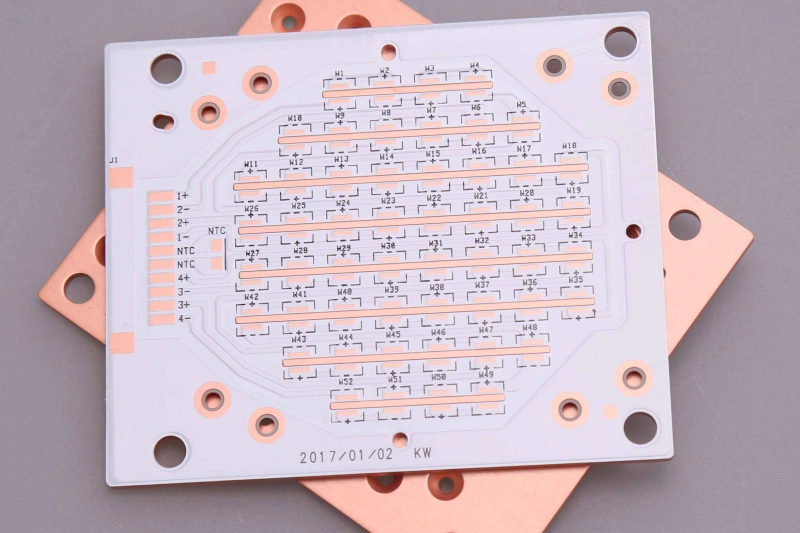
A printed circuit board of this type is defined by its layered construction. It typically consists of a metal base, which is usually aluminum or copper, followed by a thin insulating layer and a top copper circuit layer.
The metal base acts as a robust foundation that offers superior mechanical strength compared to traditional materials. By combining these layers, the board effectively manages heat while maintaining the electrical isolation required for complex circuitry.
The Role of the Dielectric Layer in Thermal Management
について dielectric layer serves as the critical bridge between the metal base and the copper circuitry. Its primary job is to provide high electrical insulation while allowing heat to pass through to the metal core.
効果的 熱管理 depends entirely on the quality and thickness of this material. A well-engineered layer ensures that heat generated by components is quickly moved away, preventing damage and extending the lifespan of the entire system.
Why Thermal Conductivity Matters for Modern Electronics
Every electronic device generates heat, but how you handle that energy determines its ultimate success. Effective 熱管理 is no longer an optional feature; it is a core requirement for any high-performance design. By prioritizing how heat moves away from sensitive parts, engineers can ensure their products remain stable and functional under heavy workloads.
The Impact of Heat on Component Lifespan
Excessive heat acts as the primary enemy of electronic reliability. When components operate at high temperatures for extended periods, the internal materials begin to degrade much faster than expected. This process often leads to intermittent failures or total system breakdown.
Improving 放熱 is the most effective way to combat this decline. By utilizing materials with high 熱伝導率, designers can pull heat away from critical junctions before it causes permanent damage. This simple shift in strategy significantly extends the operational life of your electronic assemblies.
Preventing Thermal Runaway in High-Power Systems
In the world of high-power electronics, the risk of thermal runaway is a constant concern. This dangerous phenomenon occurs when an increase in temperature changes the conditions in a way that causes a further increase in temperature. Without proper intervention, this cycle can quickly destroy an entire circuit board.
Optimizing heat transfer efficiency serves as the best defense against these catastrophic events. By creating a clear, low-resistance path for heat to escape, you keep the system within safe operating limits. Reliable cooling ensures that your power systems remain stable, even when pushed to their absolute limits.
Key Materials Used in Metal Core PCB Construction
The foundation of any reliable electronic device starts with the choice of its core material. Selecting the right substrate is vital for achieving the desired 熱伝導率 and mechanical stability in your final product.
Designers must weigh the benefits of different metals against their project requirements. Each material offers unique characteristics that influence both performance and manufacturing costs.
Aluminum Base Boards for Cost-Effective Cooling
について アルミニウムPCB is widely considered the most popular choice for general electronics. It provides an excellent balance between price and performance, making it a favorite for mass-produced items.
These boards are particularly effective in lighting solutions where 放熱 is necessary but budget constraints are tight. Aluminum is lightweight, easy to machine, and offers a reliable path for heat to escape from sensitive components.
Copper Base Boards for Superior Thermal Performance
When your design demands extreme heat management, a Copper base board is often the best solution. Copper possesses significantly higher 熱伝導率 than aluminum, allowing it to draw heat away from high-power components much faster.
“Efficiency in electronics is not just about speed; it is about the ability to manage energy and heat effectively over the long term.”
While these boards are more expensive to produce, they are essential for high-density circuits that generate intense heat. They ensure that your components stay within safe operating temperatures, preventing premature failure.
Steel Base Boards for Specialized Industrial Applications
について industrial PCB applications that require extreme durability, steel is a standout option. Steel base boards offer superior mechanical strength compared to their aluminum or copper counterparts.
They are often used in environments where the board might face physical stress or vibration. While they do not conduct heat as well as copper, their structural integrity makes them ideal for heavy-duty machinery and automotive parts.
| 素材 | 熱伝導率 | コスト | 機械的強度 |
|---|---|---|---|
| アルミニウム | 中程度 | 低い | グッド |
| 銅 | 高い | 高い | 中程度 |
| Steel | 低い | 中程度 | 素晴らしい |
Choosing the right material is a balancing act between your budget and the physical demands of your project. By understanding these core options, you can ensure your electronics remain cool, stable, and long-lasting.
Advantages of Choosing Metal Core PCB Technology
Metal Core PCB technology offers a transformative approach to modern engineering challenges. By integrating a metal base, these boards provide a robust foundation that standard materials simply cannot match. Designers often select this technology to ensure electronic reliability in demanding applications.
Enhanced Durability and Mechanical Strength
One of the primary benefits of using a metal base is the significant increase in structural integrity. Unlike traditional boards that may flex or crack under stress, metal cores provide a rigid platform that withstands vibration and physical impact. This makes them an ideal choice for industrial environments where equipment faces constant movement or harsh conditions.
The inherent strength of the metal layer protects sensitive components from mechanical failure. This durability ensures that your hardware remains functional even when exposed to extreme operational cycles. Investing in this technology often leads to a longer product lifespan and reduced maintenance costs.
Superior Heat Dissipation Compared to FR4
When performing an FR4 comparison, the difference in thermal performance becomes immediately clear. Standard fiberglass boards act as insulators, trapping heat near critical components. In contrast, metal cores act as a heat sink, facilitating rapid 放熱 away from the source.
“Effective 熱管理 is the silent hero of high-performance electronics, dictating the boundary between success and failure in power-dense systems.”
— Industry Engineering Standards
This heat transfer efficiency allows components to operate at lower temperatures, which prevents premature degradation. By optimizing 熱管理, engineers can push their designs to higher power levels without risking thermal runaway. The following table highlights why this technology is a preferred choice for high-power applications.
| 特徴 | FR4 Board | Metal Core PCB |
|---|---|---|
| 熱伝導率 | Low (0.25 W/mK) | High (1.0 – 3.0 W/mK) |
| Mechanical Rigidity | 中程度 | 素晴らしい |
| 放熱 | 貧しい | Superior |
| Cost Efficiency | 高い | 中程度 |
Space Optimization in Compact Electronic Designs
モダン compact electronics require clever solutions to manage heat within limited footprints. Because metal core boards handle heat so effectively, designers can place components closer together without worrying about overheating. This density allows for smaller, more efficient device profiles.
By reducing the need for bulky external heat sinks, you can save valuable space inside your enclosure. This streamlined design process helps manufacturers create sleeker products that do not sacrifice performance. Ultimately, choosing the right board material is essential for staying competitive in today’s fast-paced market.
Common Applications Driving the Demand for Metal Core PCB
From streetlights to electric vehicles, the demand for advanced 熱管理 is at an all-time high. Engineers are increasingly turning to specialized board materials to solve heat-related challenges in modern hardware. By integrating Metal Core PCB technology, designers can ensure their systems remain cool and reliable under heavy workloads.
High-Brightness LED Lighting Solutions
The shift toward high-efficiency LED lighting has created a massive need for superior thermal control. Because these lights generate significant heat in a small area, standard boards often fail to keep the junction temperature low. An アルミニウムPCB provides the necessary 放熱 to prevent premature component failure.
This technology allows for brighter, more compact designs that last for years. By effectively moving heat away from the light source, these boards maintain consistent color and brightness levels. It is a critical factor for both commercial and residential lighting projects.
Automotive Electronic Control Units
モダン automotive electronics must operate reliably in extreme temperature swings. From engine management systems to advanced driver-assistance features, these units require robust hardware that can handle high thermal loads. Metal Core PCB solutions offer the mechanical strength needed to withstand the vibrations and heat found under the hood.
Engineers rely on these boards to protect sensitive circuitry from thermal stress. This ensures that safety-critical systems function perfectly, even during long drives in harsh weather. 信頼性 is the primary driver for adopting this technology in the automotive sector.
Power Conversion and Renewable Energy Systems
The transition to green energy relies heavily on efficient renewable energy systems like solar inverters and wind turbine controllers. These high-power electronics generate immense heat that must be managed to maintain system efficiency. Using metal-backed boards allows for better 熱伝導率, which is essential for long-term performance.
これら industrial PCB applications are vital for maximizing the output of power conversion hardware. By reducing the risk of thermal runaway, manufacturers can build more compact and powerful energy solutions. Effective heat dissipation remains the cornerstone of innovation in the renewable energy market.
Design Considerations for Metal Core PCB Projects
Successful implementation of metal core technology hinges on your ability to navigate specific design challenges. When working with these boards, you must move beyond standard practices to ensure your hardware remains reliable and efficient. A thoughtful circuit board design is the foundation for long-term success in demanding environments.
Managing Trace Routing and Insulation Requirements
Because the base layer is conductive, you must pay close attention to electrical isolation. Failing to maintain proper clearance can lead to dangerous short circuits. Designers should prioritize the following steps to maintain safety:
- Increase edge-to-trace spacing to prevent arcing.
- Use high-quality dielectric layers to separate copper traces from the metal base.
- Verify that all mounting holes are properly insulated to avoid grounding issues.
Selecting the Right Thermal Interface Materials
The efficiency of your heat path depends heavily on the thermal interface material you choose. This substance bridges the gap between the board and the heat sink, ensuring that heat moves away from sensitive components. Without a proper bond, even the best copper base board will struggle to dissipate heat effectively.
Choosing the correct material is vital for applications like high-intensity LED lighting. A high-performance interface material reduces thermal resistance, which directly extends the life of your electronic components. Always test the bond strength and thermal conductivity of your chosen interface before moving to full-scale production.
Addressing Manufacturing Constraints and Tolerances
Every project faces unique limitations during the PCB製造 phase. You must account for these constraints early to avoid costly design revisions later. When working with compact electronics, precision is non-negotiable.
Designers should keep these factors in mind during the prototyping stage:
- Drilling tolerances: Metal cores are harder to drill than standard materials, which can affect hole placement accuracy.
- Thermal expansion: Ensure that your materials have compatible coefficients of thermal expansion to prevent warping.
- Edge finishing: Burrs on the metal edges can compromise insulation, so specify clean edge routing in your fabrication notes.
Comparing Metal Core PCB Against Traditional FR4 Boards
Deciding whether to use a Metal Core PCB or a traditional FR4 board is a pivotal moment in the engineering process. While FR4 remains the industry standard for many applications, the rise of high-power electronics often necessitates a more robust thermal solution. Understanding the nuances of this FR4 comparison helps teams align their technical requirements with their budgetary goals.
Cost-Benefit Analysis for Different Project Scales
When evaluating your circuit board design, the initial price tag is only one part of the equation. For low-power consumer goods, FR4 is usually the most cost-effective choice due to its established PCB製造 processes. However, as project scale increases, the hidden costs of thermal management—such as bulky heat sinks or cooling fans—can quickly outweigh the savings of a cheaper substrate.
“The best engineering decisions are not always the cheapest, but the ones that provide the most reliable performance over the product’s entire lifecycle.”
A printed circuit board built on a metal base often reduces the need for additional cooling hardware. This simplification can lead to lower assembly costs and a more compact final product. The following table highlights the primary differences to consider during your procurement phase:
| 特徴 | FR4 Board | Metal Core PCB |
|---|---|---|
| 熱伝導率 | 低い | 高い |
| Manufacturing Cost | Economical | Premium |
| Application Focus | General Electronics | High-Power/LED |
When to Transition from Standard Boards to Metal Core
Transitioning to a metal-backed solution is recommended when your circuit board design exceeds the thermal dissipation limits of standard glass-epoxy materials. If your components consistently run hot, you risk premature failure and reduced system reliability. Investing in a Metal Core PCB early in the development cycle can prevent costly redesigns later.
Consider a transition if your project involves high-brightness LEDs, power converters, or automotive systems where heat management is critical. By prioritizing thermal efficiency during PCB製造, you ensure that your final product meets the rigorous demands of modern technology. Ultimately, choosing the right material is about balancing current performance needs with long-term maintenance expectations.
結論
Modern electronic design demands a shift toward smarter thermal management solutions. Metal core PCBs provide the foundation for building reliable, high-power systems that push the boundaries of current technology.
Engineers who prioritize material selection and precise design strategies gain a distinct edge in product longevity. Choosing the right base material ensures your hardware operates at peak efficiency under heavy electrical loads.
Brands like Bergquist and Rogers Corporation continue to lead the way in providing materials that support these advanced circuit boards. Integrating these components into your workflow helps solve complex heat dissipation challenges effectively.
Take a moment to review your current project requirements against the benefits of metal core technology. Does your design need better heat management to reach its full potential? Share your thoughts or reach out to our engineering team to discuss your next high-performance build.
よくあるご質問
What exactly is a Metal Core PCB and how does it differ from a standard board?
A Metal Core PCB (MCPCB), also known as a thermal PCB, incorporates a metal base material—typically aluminum, copper, or steel—instead of the traditional FR4 epoxy glass. The primary difference lies in the board’s ability to manage heat; the metal core acts as a thermal bridge, efficiently moving heat away from high-power components to keep your electronics running cool and steady.
Why is the dielectric layer considered the most critical part of the board’s architecture?
について dielectric layer is the secret sauce of thermal management. It is a specialized, thermally conductive but electrically insulating layer sandwiched between the copper circuitry and the metal base. Its job is to ensure that heat is transferred rapidly to the base plate while preventing electrical shorts, maintaining the structural integrity of the entire assembly.
When should I choose an aluminum base versus a copper base board?
For most projects, such as LED lighting solutions from brands like Cree or Osram, aluminum base boards offer the best balance of cost-effective cooling and performance. However, if you are designing high-performance systems like Tesla power inverters or heavy-duty renewable energy systems, a copper base provides superior thermal performance due to its much higher thermal conductivity.
Can switching to Metal Core PCB technology prevent thermal runaway?
Yes, absolutely! Thermal runaway occurs when an increase in temperature changes the conditions in a way that causes a further increase in temperature, often leading to total system failure. Because these boards offer superior heat dissipation, they help maintain a stable operating temperature, significantly extending the component lifespan and preventing catastrophic failures in high-power systems.
How does this technology help with space optimization in compact designs?
Because Metal Core PCBs are so efficient at shedding heat, designers can often eliminate the need for bulky external heat sinks or cooling fans. This allows for significant space optimization, enabling brands like Samsung or Apple to create thinner, more powerful, and more compact electronic devices without compromising on reliability.
What are the specific design considerations for trace routing on metal core boards?
When designing for MCPCBs, you must pay close attention to trace routing and insulation requirements. Because the core is conductive, maintaining proper clearances is vital to prevent electrical arcing. Additionally, selecting the right Thermal Interface Materials (TIM) and understanding manufacturing constraints during the prototyping phase will ensure your design is both functional and scalable.
Is it worth the investment to transition from traditional FR4 to Metal Core PCBs?
It all comes down to your cost-benefit analysis. While the initial procurement cost of metal core boards may be higher than FR4, the long-term savings are substantial. By reducing the need for additional cooling components and lowering the rate of field failures, Metal Core PCB technology is a smart investment for any project where heat and mechanical strength are primary concerns.
In which industries is the demand for these boards growing the fastest?
We are seeing massive demand in the Automotive sector for Electronic Control Units (ECUs) from suppliers like Bosch, as well as in the High-Brightness LED industry. Additionally, as the world pivots toward green tech, power conversion systems for solar and wind energy are increasingly relying on the durability and thermal efficiency of metal core technology.