
Boards that connect.
Electronics that work.
Explore PCB and PCBA application examples across industrial control, connected devices, power, lighting, automotive and medical electronics.
FLJ PCB brings board fabrication, component sourcing, assembly, programming and agreed testing together in Shenzhen. Find a project type close to yours, then define the build package and acceptance requirements with our manufacturing team.
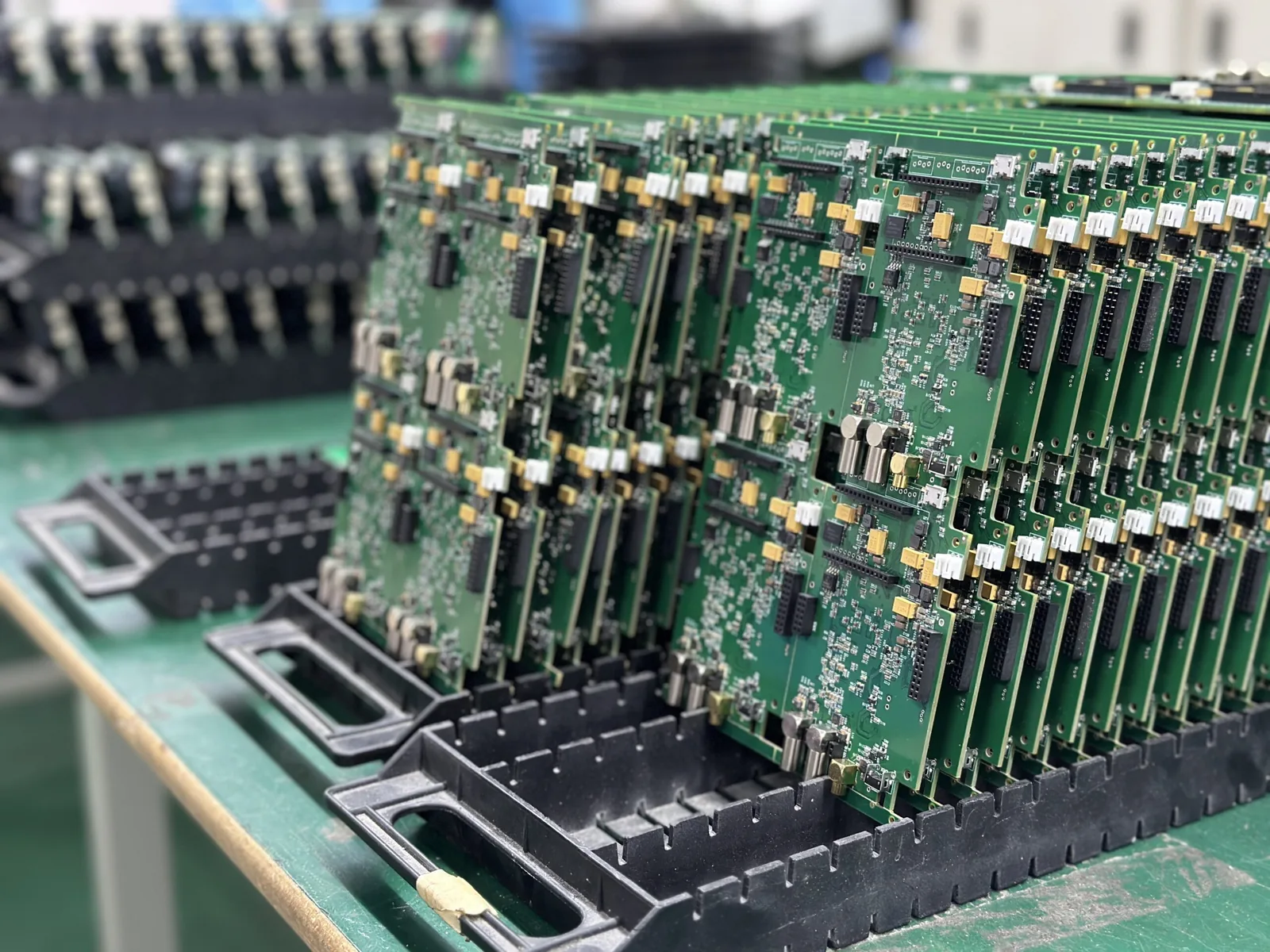
Assembly details from our production work
Populated boards, panel formats and component layouts photographed at FLJ.


Different products.
Specific manufacturing needs.
Browse representative board and assembly formats. Each application starts with its own electrical, mechanical and test requirements; the production route follows the approved design.
12 project examples
Industrial I/O & control assemblies
Interface boards for machine control, sensing and process equipment.
- Manufacturing focus
- Connector access, mixed SMT/THT assembly and configuration control.
- Bring to engineering review
- I/O schedule, connector pinout and functional acceptance limits.
Cooling fan & motor-control boards
Control electronics for fans, blowers and motor-driven products.
- Manufacturing focus
- Power-device soldering, heatsink fit and feedback connections.
- Bring to engineering review
- Motor specification, speed commands and alarm behavior.
WiFi router & gateway assemblies
Network-interface boards for connected products and gateways.
- Manufacturing focus
- Fine-pitch assembly, RF layout requirements and port alignment.
- Bring to engineering review
- Approved BOM, antenna arrangement and network test procedure.
IoT controller & sensor interfaces
Control and interface assemblies connecting a product to its sensors and network.
- Manufacturing focus
- Sensor interfaces, programming access and device identification.
- Bring to engineering review
- Power modes, firmware release and provisioning instructions.
Bluetooth & compact wireless boards
Compact wireless electronics for portable and wearable product concepts.
- Manufacturing focus
- Board outline, battery connections and enclosure clearance.
- Bring to engineering review
- Battery interface, keep-out areas and pairing test requirements.
Inverter & power-conversion assemblies
Power stages and control electronics for conversion and regulated supplies.
- Manufacturing focus
- Heavy components, thermal interfaces and electrical spacing.
- Bring to engineering review
- Input/output ranges, load profile and approved safety test limits.
Battery-management & monitoring boards
Sensing and control assemblies within a defined battery-system design.
- Manufacturing focus
- Sense connections, high-current interfaces and revision control.
- Bring to engineering review
- Cell configuration, sensing limits and protection test sequence.
LED lighting & control boards
Light engines and control assemblies for indoor, outdoor and integrated lighting.
- Manufacturing focus
- Material choice, LED orientation and thermal-path integration.
- Bring to engineering review
- LED specification, operating current and thermal interface drawing.
EV charging-control electronics
Control and interface boards for charging equipment and related power products.
- Manufacturing focus
- Connector consistency, control interfaces and approved insulation requirements.
- Bring to engineering review
- System boundary, interface map and charging-control test procedure.
Vehicle & motor-control interfaces
Control assemblies for defined vehicle-electronics and motor applications.
- Manufacturing focus
- BOM change approval, connector retention and traceability requirements.
- Bring to engineering review
- Environmental profile, acceptance criteria and required supplier documents.
Medical-device control & interface boards
Electronic assemblies for healthcare equipment within the customer’s approved product scope.
- Manufacturing focus
- Configuration control, inspection records and defined functional checks.
- Bring to engineering review
- Intended use, approved design revision and documentation requirements.
Audio & amplifier assemblies
Signal, control and power assemblies for audio and consumer products.
- Manufacturing focus
- Connector orientation, power-stage assembly and enclosure integration.
- Bring to engineering review
- Signal/load conditions, noise limits and audio test setup.
The application defines
what needs to be checked.
A product photo shows the format. The manufacturing package tells us how to build it. These three examples show the decisions we resolve before production.
Keep the board, firmware and enclosure in step.
A router or IoT controller combines network interfaces, power, antennas and firmware. Assembly preparation needs to preserve the approved configuration across all four.
- Build review: check fine-pitch footprints, component orientation, connector access and RF keep-out instructions.
- Programming: define the firmware version, programming interface, unique IDs and responsibility for credentials.
- Acceptance: agree power-up, port, pairing or network checks and the fixture or software needed.
Build the electrical and thermal paths together.
Inverter, driver and battery-related assemblies need a clear definition of the power path, mechanical interfaces and safe test conditions.
- Construction: review material, copper, spacing and creepage requirements against the released board specification.
- Assembly: define heatsinks, thermal interfaces, heavy components, connectors and any coating exclusions.
- Acceptance: specify load points, protection behavior and any insulation or dielectric tests required by the design.
Make every build traceable to an approved revision.
Medical, automotive and industrial procurement often require more than a functional board. The design baseline, acceptance criteria and release records need to be agreed at the start.
- Configuration: align Gerbers, BOM, placement data, firmware and drawings to one released revision.
- Changes: route substitutions and engineering changes through customer approval before use.
- Records: define material traceability, serial or lot identification and the inspection/test records to retain.
From bare boards
to an integrated assembly.
Specify what should arrive at your facility. A fabrication order, a populated board and a tested product have different file, sourcing and acceptance requirements.
| What you need | Manufacturing scope | Define before release | Next step |
|---|---|---|---|
| ベアPCB | Board fabrication to the approved stack-up, material, finish and drawing. | Gerber/ODB++, drill data, fabrication notes, quantities and acceptance criteria. | PCB製造 |
| Assembled PCBA | SMT, through-hole or mixed assembly with the agreed sourcing arrangement. | BOM, placement file, assembly drawings, supplied-part ownership and substitutions. | Turnkey assembly |
| Programmed & tested board | Firmware loading and electrical/functional verification to the agreed procedure. | Released firmware, fixture/interface, pass limits and records required. | Testing scope |
| Integrated product assembly | Board, cables, mechanical parts and enclosure assembly within the confirmed build scope. | Mechanical drawings, wiring map, integration instructions, labels and packaging. | Box build |
Connect the electronics
to the finished build.
Some projects stop at the PCBA. Others need cables, connectors, mechanical parts, programming, labels and packaging coordinated into one delivery. FLJ PCB can review that wider assembly scope with your team.
Share the mechanical drawing and wiring instructions alongside the board files. We can then identify interfaces, assembly responsibilities and the checks needed before shipment.
A clear route from
files to repeat production.
Prototype, pilot and production builds answer different questions. Agree the release checkpoints and required evidence before the order moves forward.
- 01
Scope & file review
Confirm deliverables, review the revision package and resolve DFM/DFA questions.
- 02
Materials & first build
Review component availability, approve alternatives and agree first-article checks.
- 03
Inspection & acceptance
Build to the agreed process and verify workmanship, programming and specified functions.
- 04
Release & repeat
Approve the production baseline, shipment records and change controls for subsequent orders.
A useful brief makes
the first review faster.
Send the manufacturing package you have today, together with the delivery level and intended application. If the design is still developing, share the requirement and identify which engineering work is needed.
Send your project briefYour review checklist
- Application & scope: product function, environment and bare board, PCBA or integrated assembly.
- Board & assembly: fabrication files, BOM with manufacturer part numbers, placement data and drawings.
- Supply & schedule: turnkey/consigned split, prototype and production quantities, destination and target date.
- Firmware & tests: release version, fixtures, pass limits and required inspection records.
- Mechanical & quality: cables, enclosure, packaging, acceptance class and supplier documentation.
Before you choose
a manufacturing route.
Clarify the application, supplied files and acceptance requirements before comparing quotations.
What kinds of PCB and PCBA projects can FLJ PCB review?
FLJ PCB reviews industrial control, connected-device, power, lighting, automotive, medical and consumer-electronics assemblies. The scope may include PCB fabrication, component sourcing, assembly, programming, agreed testing and box build. Feasibility is assessed from the actual design and delivery requirements.
Can you quote a board similar to an example shown here?
Yes. Tell us which example is closest to your application, then send your own design files or product brief. Board construction, BOM, quantities, sourcing and test scope determine the quotation; a similar appearance does not imply an identical circuit or production route.
Do you support prototypes before production?
Yes. A prototype build can establish assembly fit, programming access and the agreed test procedure. Pilot and repeat production should use an approved file revision, BOM and acceptance plan, with changes reviewed before release.
Can you build from a sample or an incomplete design?
Share the sample details and available drawings or requirements for assessment. Engineering work, design ownership, firmware and acceptance responsibilities must be defined before an assembly quotation can be finalized.
How are medical and automotive project requirements handled?
Specify the supplier quality requirements, approved design, traceability and records needed for your product. ISO 13485 and IATF 16949 relate to management systems and their certified scope; IPC acceptance criteria and RoHS/REACH material documentation address different requirements. Finished-device regulatory or market approval belongs in a separate product compliance plan.
Can you protect confidential project information?
Start with a non-confidential summary and request an NDA before sharing sensitive files. Identify proprietary firmware, customer-owned tooling and any restrictions on project photos or public references during scope review.
Bring the design.
Let’s define the build.
Share your board files, application, quantities and test requirements with the FLJ PCB manufacturing team.