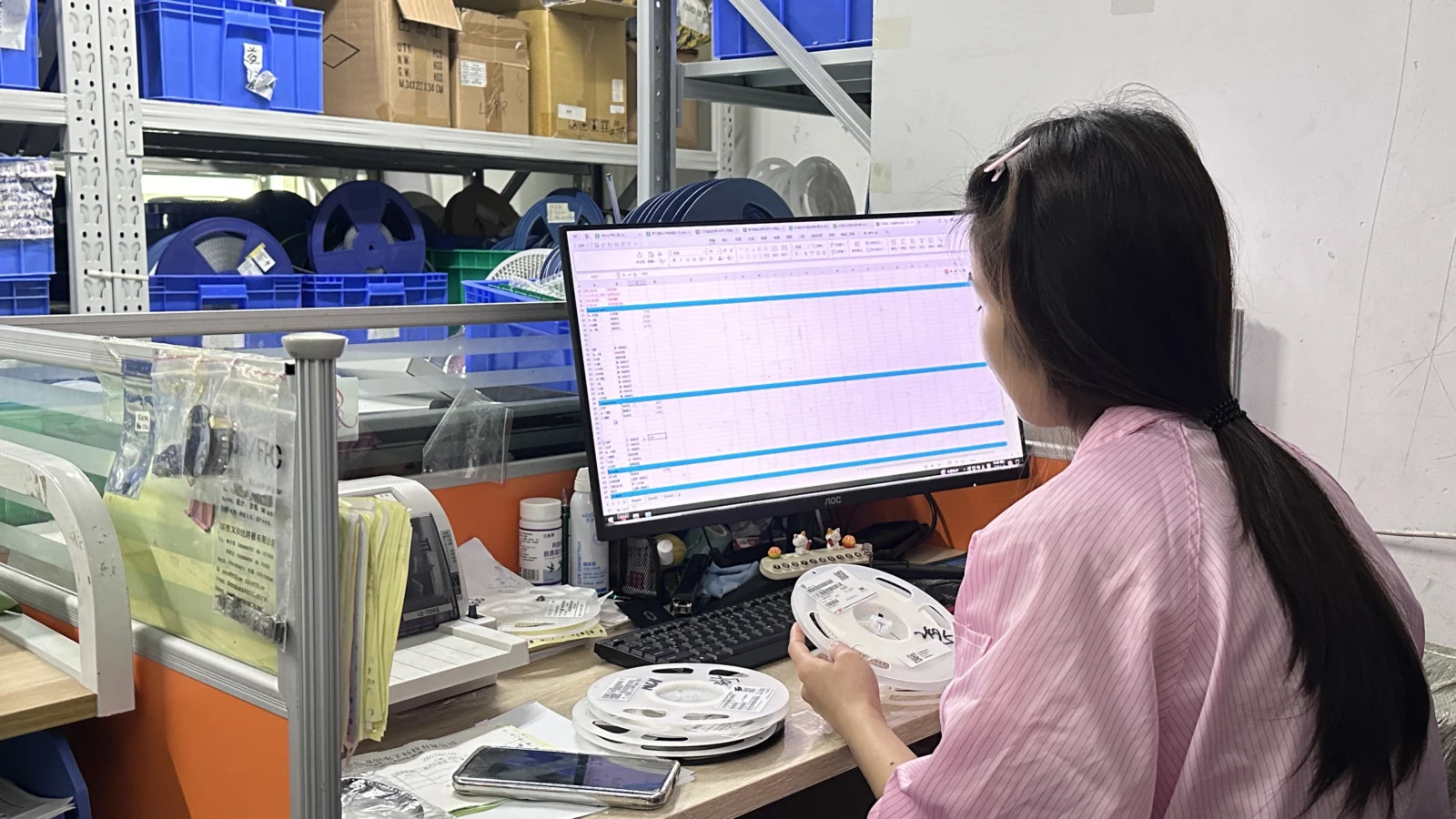


Automated SMT Assembly
FLJ produces surface-mount assemblies through solder-paste printing, placement and reflow. Stencil openings, foil thickness and paste influence the deposited amount and how paste releases from the stencil onto the lands. Checking selected deposits before placement lets us address a printing issue before the same setup is repeated.
Placement ties each component to its feeder or tray, package data, board reference, location and rotation. Part identity and polarity match the current BOM and placement data, and do-not-populate (DNP) positions remain unpopulated. These checks matter because an incorrect mapping or orientation can be repeated along with the placement program.
Reflow melts solder, wets the joint surfaces and forms connections as the board cools. The thermal process depends on board construction, component limits, population and thermal mass. Areas can respond differently, so an oven setting does not describe every joint’s temperature. On double-sided boards, the second-side sequence accounts for components and joints already present, their later heat exposure and the support needed to handle the assembly.