
SPECIFIED MATERIAL. FINISHED CIRCUIT BOARD.
Isola PCB
Manufacturing
From 370HR multilayers to low-loss digital and microwave boards.
FLJ manufactures PCBs with Isola laminate and prepreg systems, including 370HR, FR408HR, I-Speed and I-Tera MT40. Choose a material family for the electrical and thermal demands of your product, then carry that construction through fabrication and assembly.
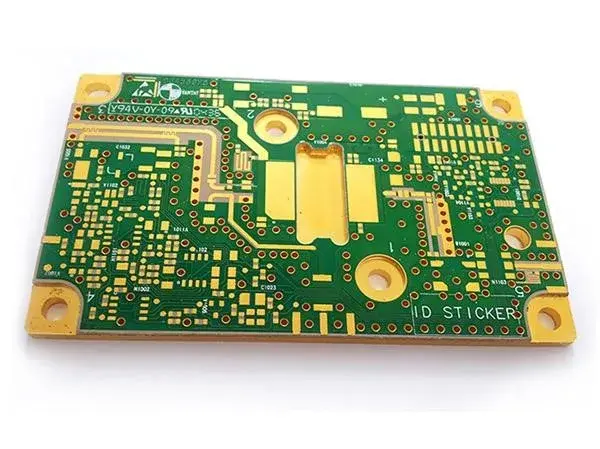
MATERIAL COMPARISON & TECHNICAL DOCUMENTS
Find the Isola grade for your board
Thermal reliability, dielectric loss and halogen-free requirements lead to different material choices. Compare selected grades below and open the matching Isola documentation for construction options and processing information. The quotation confirms the available core thickness, foil and prepreg combination for your chosen grade.
| Grade | Tg °C · DSC | Td °C · TGA 5% | Dk 10 GHz | Df 10 GHz | Selection focus | Official data |
|---|---|---|---|---|---|---|
| 185HR | 180 | 340 | 3.88 | 0.0236 | Thermal-reliability epoxy | |
| 370HR | 180 | 340 | 3.92 | 0.0250 | Thermal-reliability FR-4 | |
| FR408HR | 190 | 360 | 3.65 | 0.0095 | Lower-loss epoxy | |
| I-Speed | 180 | 360 | 3.63 | 0.0060 | Low-loss epoxy | Product page |
| I-Tera MT40 | 215 | 360 | 3.45 | 0.0031 | Very-low-loss multilayers | |
| Tachyon 100G | 215 | 360 | 3.02 | 0.0021 | Very-low-loss digital | |
| Astra MT77 | 200 | 360 | 3.00 | 0.0017 | RF / microwave | |
| IS550H | 200 | 400 | 4.43 | 0.016 | Halogen-free thermal reliability |
Typical material values from the linked Isola documents, checked October 2026. Tg is the glass-transition temperature, not a continuous operating-temperature rating. Dk and Df vary with construction and test method; these values are material-selection references, not finished-board loss or FLJ process limits. I-Speed links to the official product page.
Measurement notes for this comparison
All electrical values shown are at 10 GHz. Dk uses Bereskin Stripline for 185HR, 370HR, FR408HR and I-Speed; the I-Tera MT40, Tachyon 100G, Astra MT77 and IS550H sheets list IPC-TM-650 2.5.5.5. Df uses Bereskin Stripline except 370HR and IS550H, whose sheets list 2.5.5.5. Tg is measured by DSC; Td is measured by TGA at 5% weight loss. Refer to the individual document and selected construction when setting design inputs.
185HR & 370HR
These epoxy systems suit multilayers where assembly heat exposure and interconnect reliability are central considerations. Their thermal-reliability focus does not make them low-loss grades: a faster or longer digital channel may call for a different material.
FR408HR to Tachyon 100G
FR408HR and I-Speed offer lower-loss choices within an epoxy process route. I-Tera MT40 and Tachyon 100G extend the range for more demanding digital interconnects. Channel length, rise time, copper roughness and the loss budget guide the choice alongside Df.
Astra MT77
Astra MT77 combines low dielectric loss with a published Dk of 3.00. It is a candidate for microwave circuits where dielectric behavior and the manufactured transmission-line geometry both matter.
IS550H
IS550H addresses halogen-free material requirements with a high-temperature laminate and prepreg system. Its role is different from an ultra-low-loss microwave material: the selection begins with the product’s environmental and thermal requirements.
THE MATERIAL SYSTEM INSIDE THE PCB
A core holds the circuit.
Prepreg bonds the layers.
An Isola grade is the beginning of a construction specification. Core thickness, glass reinforcement, resin content and copper foil turn that grade into the physical material used for your board.
Cured dielectric with copper
A core has an already-cured resin-and-glass structure. Its dielectric thickness and copper cladding establish the starting material for the patterned circuit layers.
Bonding material that flows and cures
Prepreg carries partially cured resin in glass reinforcement. Heat and pressure let the resin fill around patterned copper before it cures, bonding the stack and forming dielectric spacing between circuit layers.
Illustrative material strips; not a production stackup or thickness drawing.
Why “I-Speed, 1067 glass” is only a starting point
Isola’s I-Speed core table lists different resin contents and dielectric values for the same glass style. The construction, rather than the brand name alone, supplies the electrical design input.
Dk 3.57 at 10 GHz
Dk 3.45 at 10 GHz
Published core examples from the Isola I-Speed construction table. These are material data, not two interchangeable finished-board stackups.
Copper coverage changes the bonding job
A sparse circuit layer leaves more space for resin to fill than a broad copper plane. Prepreg construction is therefore selected with the circuit’s copper distribution, resin content and required pressed spacing in view. The glass style alone does not define the finished dielectric thickness or Dk.
MULTILAYER FABRICATION
Manufacturing the specified construction
Material selection continues onto the production floor. FLJ controls the circuit geometry, bonded stack and plated interconnections as parts of one finished board.
Inner layers & lamination
The selected core and foil enter imaging and etching; copper weight and profile accompany the grade in the build specification. AOI checks the inner circuits before lay-up. Cores, prepreg plies and outer foil are then registered and pressed. Resin content, copper coverage and the selected cure cycle work together to produce the bonded spacing required by the stackup.
Drilling & plated connections
Drilling opens the interlayer connections. Hole preparation removes drilling residue and exposes the inner copper interfaces; conductive seeding and copper plating then create the connection through the board. Drill conditions and preparation follow the selected material system.
Outer circuits & finished boards
The outer circuit pattern, solder mask, selected surface finish and routed profile complete the fabricated board. Electrical testing checks opens and shorts. Dimensional inspection, microsections and impedance coupons provide the construction and interconnect checks specified for the job.
For repeat production, the released build retains the exact grade, core and prepreg constructions, foil option and stackup revision. Incoming-material and lot records connect those selections to the boards being made; a material alternate is handled as a construction change.
Explore multilayer PCB manufacturing
BUILT INTO ELECTRONIC PRODUCTS
From control electronics
to connected systems
Industrial control and power-management boards can prioritize thermal durability and plated-hole reliability. Communication and computing boards often place a stronger emphasis on channel loss, timing and consistent dielectric construction.
The grade follows the circuit’s job. A network product can contain both demanding high-speed links and routine control circuitry; material selection should address those functions rather than the product category alone.
High-speed PCB manufacturingPROTOTYPE, PRODUCTION & ASSEMBLY
Order your Isola PCB construction
FLJ supplies bare boards and assembled PCBs, carrying the specified material construction from prototype builds into repeat orders. Share the required grade, fabrication files, stackup and order quantity for a manufacturing quotation. If the grade is still open, include the electrical and thermal priorities so material options can be compared.
Core thicknesses, prepreg constructions, copper weights and procurement lead time are confirmed for the selected grade and build.