
Quick Turn
PCB Assembly Services
Move from released design files to assembled boards with a production plan built around your deadline.
FLJ PCB brings PCB fabrication, component sourcing, SMT and through-hole assembly together for time-sensitive builds. Send your BOM, board files and required arrival date. We can review material availability, assembly requirements and testing before confirming an achievable schedule.
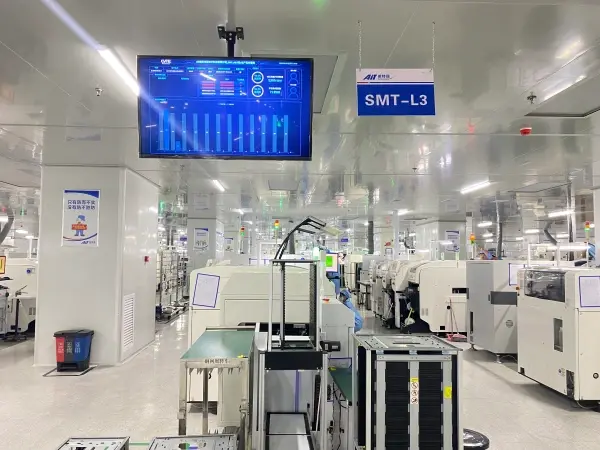
What is quick turn PCB assembly—and when does it make sense?
Quick turn PCB assembly is the assembly of electronic components onto a circuit board on an expedited, agreed production schedule. It can include sourcing and bare-board fabrication, or start with boards and parts that are already available. The scope matters: a fast bare PCB delivery is not the same as receiving a tested PCBA.
This route is useful when a hardware team needs a design on the bench for validation, a demonstration build ahead of a customer review, or a repeat order to cover an urgent requirement. A prototype is defined by its development purpose; a quick-turn order is defined by its deadline. Either a new design or an established product may need expedited assembly.
If the design is still changing, use our prototype PCB assembly service to discuss iteration and validation. For an urgent build, the immediate question is which design revision can be released and what must be completed before shipment.
How fast can your PCB assembly be completed?
There is no single turnaround that fits every board. A ready-to-build kit and a turnkey order with a long-lead IC have different starting points—even when the assembly work looks similar.
| Your order situation | What we need to confirm | What can determine the schedule |
|---|---|---|
| Bare boards and components available | Approved files, incoming quantity and condition, complete kitting, assembly and test scope | Line setup, stencil readiness, first-article approval and production capacity |
| Turnkey fabrication and sourcing | Board requirements, exact part availability, approved alternatives and procurement rules | The longest material or fabrication task, followed by assembly and agreed testing |
| BGA, mixed technology or special boards | Package details, board handling, soldering sequence and inspection requirements | Additional setup, thermal considerations and special processes |
| Programming or functional testing required | Firmware, programming method, acceptance criteria and available test equipment | Fixture or software preparation, validation and the time to test each board |
When the assembly clock starts
Our quotation should identify the production start conditions. These include the released document revision, accepted materials, agreed test scope and order approval. Sending a BOM starts a review; it does not automatically start the assembly lead time. Where possible, sourcing, board preparation and setup planning can run in parallel, but production still depends on their readiness.
Shipment date is not delivery date
Tell us when the boards need to arrive, where they are going and whether a partial delivery would help. Production completion, dispatch, carrier transit and customs are separate milestones. A useful urgent-order plan works backward from your required arrival date and identifies the remaining shipping window.
Include the date and destination in your enquiry. We will assess feasibility for your actual board and material list rather than applying a generic “24-hour” promise.
Discuss the earliest practical shipment →Turnkey, partial turnkey or consigned: which route fits your deadline?
The right sourcing arrangement depends on where your critical parts and boards are today. Compare the complete preparation time, not just the time spent on the SMT line.
| Supply model | Division of responsibility | Deadline considerations |
|---|---|---|
| Turnkey | FLJ coordinates board fabrication and component sourcing for the agreed BOM. | Availability and approved substitutions must be checked before the production window is confirmed. |
| Partial turnkey | You supply selected parts; FLJ sources the remaining agreed items. | Both supply streams must reach a complete, checked kit. Define ownership for every BOM line. |
| Consigned / kitted | You provide the agreed boards and components for assembly. | Shipping, shortages, packaging and incoming inspection still affect readiness. |
For customer-supplied components, send a packing list that maps labels to manufacturer part numbers and quantities. Include the agreed spare quantity for setup and handling; this depends on packaging and part type. Loose or poorly identified parts can add preparation work. Customer-supplied material is not automatically the fastest option if it arrives late or incomplete.
For sourced parts, tell us whether exact manufacturer part numbers are mandatory, whether an approved vendor list applies and who may authorize alternatives. We should not substitute a component simply to meet a date. See our full and partial turnkey assembly options for the wider purchasing scope.
Assembly capabilities for time-critical builds
FLJ’s assembly services cover SMT, through-hole and mixed-technology boards. A fast-turn review checks the complete process route: package types, board handling, soldering stages and any work after assembly.
Fine-pitch and hidden-joint packages need the right setup and inspection plan. Double-sided assembly requires consideration of the mounting sequence and thermal exposure. Connectors, tall components and mechanically sensitive parts may introduce handling or tooling requirements that a simple component count does not capture.
Send the actual board data for review. Use our capability overview for broader manufacturing information, and identify any special requirements in your enquiry.
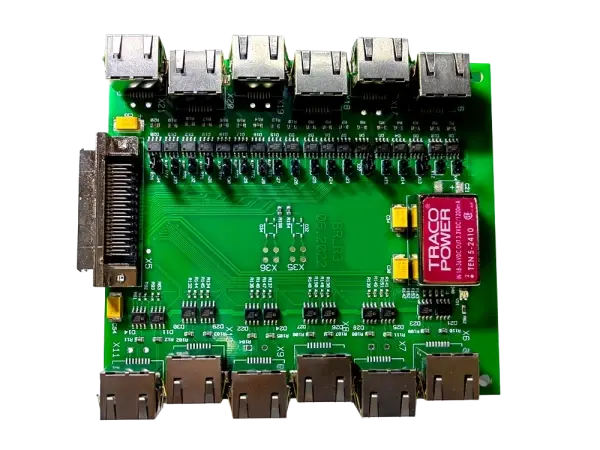
| Requirement | Information to provide | Why it matters for an urgent build |
|---|---|---|
| SMT / double-sided assembly | BOM, placement coordinates, side information and assembly drawing | Feeder setup, orientation, printing and reflow sequence |
| Through-hole / mixed assembly | Lead and hole details, connector drawings and assembly order | Solder access, fit and the additional process stage |
| BGA / QFN packages | Package information, footprint and inspection expectations | Thermal setup and evaluation of joints beneath the package |
| Programming / coating / final assembly | Firmware, interface, masking instructions or mechanical drawings | Separate preparation, validation and processing time |
Our quick turn PCB assembly process
Urgent work benefits from decisions made before the line starts. The objective is to resolve questions early, keep the released revision consistent and avoid preventable pauses between stages.
- 01
Review the order
Share the required arrival date, quantity and released files. Define whether the order includes fabrication, sourcing, assembly, programming or testing.
- 02
Check design and materials
Review assembly data and BOM availability. Resolve footprint, orientation, substitution and access questions before they become production holds.
- 03
Prepare the build
Coordinate boards, accepted components, stencil and setup data. Check the kit against the released BOM and identify missing items.
- 04
Assemble and verify
Set up SMT and any through-hole operations. Check the first article against the assembly instructions before continuing the run.
- 05
Inspect and test
Carry out the inspection, programming and testing agreed for the order. Investigate failures before final release.
- 06
Release and ship
Confirm the finished quantity, agreed documentation and destination. Pack for the product’s handling requirements and arrange dispatch.
The engineering release should tie together the Gerber or board data, BOM, placement file and assembly drawing. If a revision changes during preparation, identify which files changed and whether material, stencil or setup work must be repeated. An urgent schedule is easier to manage when there is one approved document set and a clear person responsible for decisions.
What can delay a quick turn PCBA order?
Assembly speed is only one part of turnaround. A missing component, an ambiguous drawing or an unprepared test can hold a board even when production equipment is available.
Component availability and alternatives
A BOM needs a complete manufacturer part number, not only a value or generic description. Package, tolerance, rating and temperature grade can all affect suitability. Availability should be assessed against the order quantity and permitted sources, not inferred from a catalogue listing.
If a specified part is unavailable, an alternative may require electrical, mechanical or firmware review. Provide your approval rules early. Where a substitute changes the footprint or function, the schedule must include the resulting engineering work.
File revisions and assembly details
BOM reference designators should match the placement file and drawing. Mark do-not-populate positions consistently. Provide polarity, pin-one orientation and instructions for parts that placement data alone cannot describe.
Changes after stencil or setup preparation may create rework. A small change on the schematic can affect purchasing, placement, test limits or firmware, so send a revision summary with updated files.
Testing, special processes and shipping
Functional tests need defined inputs, outputs, pass limits and equipment. Programming needs a released image and a usable interface. Coating, curing or mechanical assembly adds operations after soldering. International transit also depends on the destination and shipping arrangement; dispatch is not a guarantee of arrival on a particular day.
- Release one matching set of board, BOM, placement and assembly files.
- Identify customer-supplied parts and any permitted alternatives.
- State the required quantity, arrival date and destination.
- Describe inspection, firmware and functional-test requirements.
- Nominate a contact who can approve engineering questions.
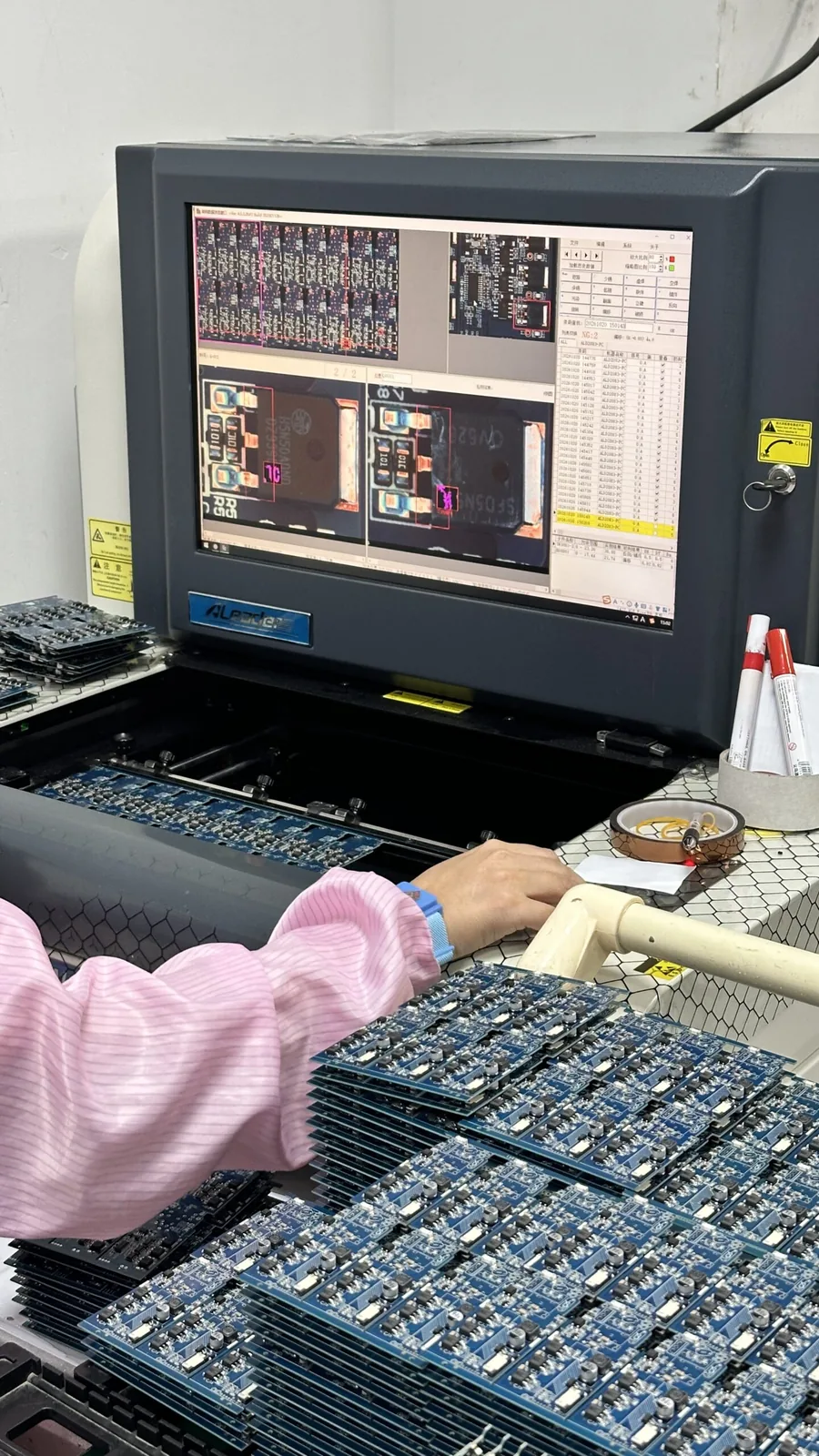
Quality controls and testing for expedited assembly
Expediting an order changes its scheduling requirements. The agreed workmanship, inspection and test requirements still apply. Define the acceptance criteria during the quotation review so the production plan includes the necessary checks.
Incoming checks, first-article verification and final inspection serve different purposes. AOI can help identify visible assembly defects such as missing parts, orientation errors or certain soldering defects. Joints beneath a BGA require a suitable hidden-joint inspection method; they cannot be assessed by surface appearance alone.
Electrical and functional testing should be selected for the product and available test access. A visually acceptable assembly is not proof that every function meets its specification.
Agree the inspection and test plan
Discuss where X-ray is appropriate, whether an electrical test is required and what a functional test should exercise. ICT depends on access and a suitable test setup. FCT may require a fixture, loads, firmware and a customer-approved procedure. Test preparation is part of the schedule, especially on a first build.
Specify the applicable IPC acceptance class and requirements. IPC-A-610 addresses assembly acceptability; J-STD-001 addresses soldering process requirements. Neither should be presented as a substitute for product-specific functional verification.
Request the right delivery records
Identify any required inspection results, test records, programming revision and batch traceability information before production. The quotation can then define which records accompany the shipment and how they relate to the order revision.
Management-system certificates, workmanship criteria and material compliance documents have different scopes. Ask for the relevant FLJ certification and material documentation for your project; these do not automatically establish certification of your finished device.
What determines quick turn PCB assembly cost?
The price of an expedited assembly depends on what must be prepared, purchased and produced. Two boards with the same number of components can need different sourcing effort, soldering processes and tests.
- Boards and components
- Material, board construction, part availability, procurement quantities and approved sources.
- Assembly preparation
- Stencil, programming of the production setup, handling needs and first-article work.
- Expedited scheduling
- Whether the requested window can be supported and what additional arrangements are required.
- Testing and additional processes
- Fixture or software preparation, programming, coating and final assembly where requested.
- Shipping and commercial terms
- Destination, delivery service and which freight, duties or taxes are included.
Ask the quotation to separate one-time preparation from quantity-related costs and optional operations. Existing tooling or an unchanged repeat build may reduce preparation work, but its condition and suitability still need checking.
If the entire order cannot arrive at once, discuss whether an initial quantity would meet your immediate need. Split shipments can add handling or freight costs, so compare the complete plan. Clear files and early decisions are often more useful than asking for a lower headline unit price.
Why work with FLJ PCB for an urgent assembly project?
FLJ PCB is the manufacturing brand of Shenzhen Philifast Electron Co., Ltd. Our services bring together PCB manufacturing, assembly and related electronics support, allowing the fabrication, material and assembly requirements to be reviewed as one project.
The value of that coordination is practical: procurement needs the released BOM, production needs consistent setup data, and quality needs defined acceptance criteria. An urgent order should connect those decisions rather than leave you to reconcile separate supplier assumptions.
Our published factory and equipment material shows assembly, inspection and programming activities. Review the factory and equipment overview and Philifast company profile, then share the capabilities and documentation your project requires.
For your enquiry, identify who can approve substitutions, engineering changes and test requirements. We can discuss responsibilities and milestones alongside the technical scope, so you know what information is needed to move the build forward.
PCB assembly project examples
These company portfolio examples show the kinds of application details that matter during a quick-turn review. They illustrate assembly scope rather than a guaranteed delivery time.
Industrial I/O & control
Connector fit, mixed component types and interface verification can affect assembly sequence and testing. Include the relevant drawing and operating conditions in your enquiry.
Communication & gateway boards
Identify programming requirements, interface checks and any RF-related test expectations. These may require preparation beyond soldering and visual inspection.
Power-conversion electronics
State electrical ratings, handling requirements and safe test conditions. Power-stage validation needs an agreed procedure and suitable equipment.
Quick turn PCB assembly FAQs
Have a requirement that changes the schedule? Include it in your first enquiry so it can be considered with the board and material review.
Is 24-hour PCB assembly possible for my project?
A very short assembly window depends on approved files, accepted boards and components, available production capacity and a manageable process and test scope. It does not automatically include fabrication, sourcing or transit. Send the actual project data for FLJ to assess a feasible window.
Does turnaround include PCB fabrication and component sourcing?
Only when they are included in the quoted scope. Ask for separate preparation, assembly and shipment milestones. A complete turnkey schedule must account for the availability of the boards and all required components.
Can I supply my own boards or components?
Yes, discuss a consigned or partial-turnkey arrangement. Send the supply list, quantities and expected arrival date. Parts need clear identification and suitable packaging, and the incoming kit must be checked before production readiness is confirmed.
Can BGA or mixed-technology boards be expedited?
They can be reviewed for expedited production, but package, thermal, soldering and inspection requirements affect the plan. Include the board data and package details. The schedule must cover any additional operations rather than assume an SMT-only route.
What happens if a part is unavailable or the BOM changes?
Availability issues may require an approved alternative or a revised schedule. A BOM change can also affect purchasing, stencil, setup or testing. Provide updated revision-controlled files and confirm the engineering decision before the affected work proceeds.
Which inspection and testing records can I request?
Describe the records your project requires during quotation review. Inspection, electrical testing, functional testing and programming records depend on the agreed scope and setup. Confirm the documents to be delivered, rather than assuming every method is included on every order.
Can you ship internationally or split an urgent order?
Discuss the destination, required arrival date and priority quantity with us. A partial shipment may be an option, subject to the build and logistics plan. Production completion and international delivery remain separate milestones, with transit and customs considered in the schedule.
Request a quick turn PCB assembly quote
Tell us what needs to arrive, where and when. A complete file package helps us assess the build; if some information is not ready, explain the gaps so we can discuss the next step.
Prepare these files
- Gerber / board fabrication data
- BOM with manufacturer part numbers
- Placement / centroid file and assembly drawing
- DNP positions and revision information
- Test requirements and firmware, if applicable
Email your files to [email protected]. A requested date is assessed during review and confirmed with the quotation.