
Aluminum PCB Manufacturing
Custom circuits. An aluminum foundation.
FLJ manufactures aluminum PCBs for LED lighting, power electronics and compact thermal assemblies. Choose your laminate, circuit copper and board profile, with prototype quantities, production supply and component assembly available.
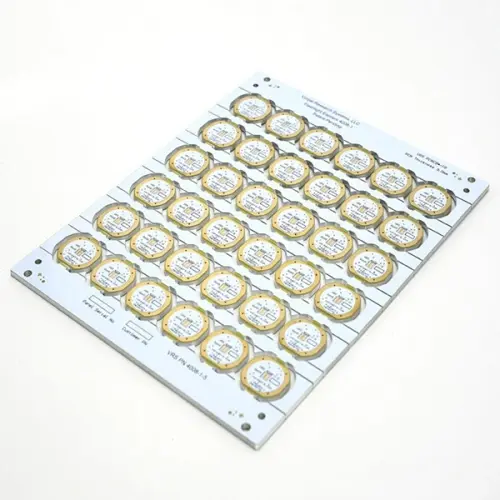
Aluminum PCB Construction
An aluminum PCB combines a copper circuit with a metal backing. In a conventional insulated metal substrate (IMS), a thermally conductive dielectric bonds the copper foil to the aluminum. The dielectric electrically separates the circuit from the metal, while transferring heat toward the base and the attached cooling structure.
FLJ supplies single-sided aluminum boards, double-sided constructions and aluminum-backed multilayer PCBs. A single circuit layer suits many LED arrays; additional routing layers accommodate more complex circuits. The base alloy and thickness are selected with the laminate: options include 1060, 5052 and 6061 aluminum, with the choice influencing stiffness, thermal expansion and machining.
Aluminum belongs to our metal-core PCB range. Copper-core PCBs provide another base-metal option for designs with different heat-spreading and weight priorities.
Forms the tracks, pads and current-carrying areas. Copper thickness influences conductor geometry and etching.
Provides electrical insulation and transfers heat across the bonded layer. Thickness and formulation both influence its performance.
Circuit copper, dielectric and finished-board thickness are separate specifications.
Aluminum-Based Laminates We Support
FLJ supports aluminum-based copper-clad laminates from Ventec, GDM, BOYU, TCLAD and Shengyi. Order with a specified material or choose a construction around your thermal, electrical and mechanical requirements.
Scroll to compare grades and thicknesses →
| Supplier | Laminate / grade | Typical dielectric conductivity W/m·K | Dielectric thickness / options |
|---|---|---|---|
| Ventec | VT-4B3 | 3.0 | 50 / 75 / 100 / 125 / 150 / 180 μm |
| Ventec | VT-4B5 | 4.2 | 50 / 75 / 100 / 150 / 200 μm |
| Ventec | VT-4B7 | 7.0 | 75 / 100 / 150 μm |
| GDM | GL12 / GL22, A2 grade | 1.08 | Contact us for grade and thickness selection |
| BOYU | AL-01-B20 | 2.0 | 100 / 120 / 180 μm standard; 75 μm special |
| TCLAD | Thermal Clad HT | 2.2 | 75 / 100 / 150 / 225 μm |
| TCLAD | Thermal Clad HPL | 3.0 | 50 / 76 / 100 / 150 μm |
| Shengyi | SAR15 | 1.5 | 100 μm reference construction |
| Shengyi | SAR30 | 3.0 | 100 μm reference construction |
Typical material values describe the listed dielectric grade; test methods differ between material families. AL-01-B20 uses a 1.5 mm aluminum / 120 μm dielectric reference; SAR15 and SAR30 use 1.5 mm aluminum / 100 μm dielectric / 1 oz copper references.
A thinner dielectric shortens the through-thickness heat path, while the insulation duty also depends on the selected material and construction. Match the dielectric, aluminum thickness and circuit copper together.
Send the grade, drawing and quantity for a quote. If the grade is open, tell us the thermal and insulation performance you need.
Contact us about aluminum laminatesAluminum PCB Manufacturing Capabilities
Custom aluminum boards are available with routed outlines, mounting holes and slots for the circuit and its enclosure. The fabrication range below covers board dimensions, conductor thickness and finished surfaces.
See our metal-core PCB capabilities for the wider aluminum and copper manufacturing scope.
| Finished-board thickness | 0.2–5.0 mm |
|---|---|
| Finished circuit copper | 18 / 25 / 35 / 70 μm |
| Material thermal conductivity | 1–12 W/m·K, depending on laminate |
| Minimum conductor spacing | 0.2 mm |
| Hole tolerance | ±0.1 mm |
| Outline accuracy | ±0.15 mm |
| Thickness tolerance, ≥1.0 mm | ±10% |
| Thickness tolerance, <1.0 mm | ±0.1 mm |
| Surface finishes | ENIG, immersion silver, immersion tin, OSP |
The selected material and construction determine the combination of size, thickness, copper and finish. Material conductivity is distinct from the thermal resistance of the assembled product.
Aluminum PCB Fabrication
Aluminum processing combines copper circuitry with precision metalwork. The result needs a sound insulating layer, an accurate mounting profile and a solderable circuit surface.
Copper pattern and bonded laminate
Production starts with the selected aluminum-based laminate. Imaging defines the circuit; etching removes unwanted copper. Pattern compensation follows the circuit copper thickness so the finished tracks and spaces match the design. Protection of the aluminum backing continues through wet processing and handling.
Drilling, slots and board outlines
Mounting holes, slots and routed edges connect the board to the mechanical assembly. Tooling and workholding control the finished shape, while deburring removes sharp projections and loose metal near the circuit. Clean hole edges and an intact dielectric preserve the electrical separation around these features.
Insulated electrical connections
A mounting hole has a different purpose from a plated electrical connection. An insulated through-connection can use a larger clearance in the metal, insulating fill and a smaller drilled-and-plated hole through that fill. The plated barrel then connects the circuit layers without touching the aluminum. Aluminum-backed multilayer boards also require the bonded routing stack to be considered separately from the metal support.
Electrical and dimensional inspection
Finished boards are checked for circuit continuity and shorts, hole and profile dimensions, solder-mask coverage and surface condition. Copper-to-base insulation testing follows the specified voltage and test conditions. The exposed backing remains protected from scratches and process residue through packing.
White Solder Mask and Aluminum PCB Assembly
Supply can extend from the finished bare board to a populated assembly, with the board surface and soldering process matched to the product.
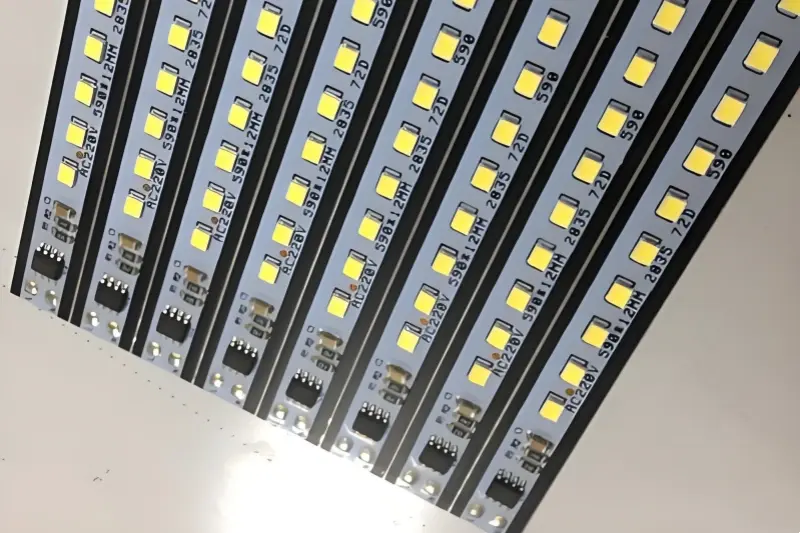
A reflective surface for LED boards
White solder mask provides a reflective background around LED packages while covering the circuit copper between exposed pads. Its formulation and cure influence coverage, adhesion and resistance to yellowing during heat and UV exposure. Pad openings and printed identification complete the finished board face.
ENIG, immersion silver, immersion tin and OSP protect the exposed copper for soldering. Our PCB surface finish options cover the differences between these pad treatments and the mask surrounding them.
Printing, placement and reflow
The metal base changes how the assembly absorbs and spreads heat during soldering. Our SMT assembly combines controlled paste printing, component placement and a measured reflow profile for the board and component mix. Solder volume and component seating matter alongside temperature, particularly beneath LED thermal pads and power packages.
Inspection checks component position and solder-joint formation. For a populated-board order, PCB assembly services can include component sourcing and the electrical or functional tests specified for your product.
Aluminum PCB Applications
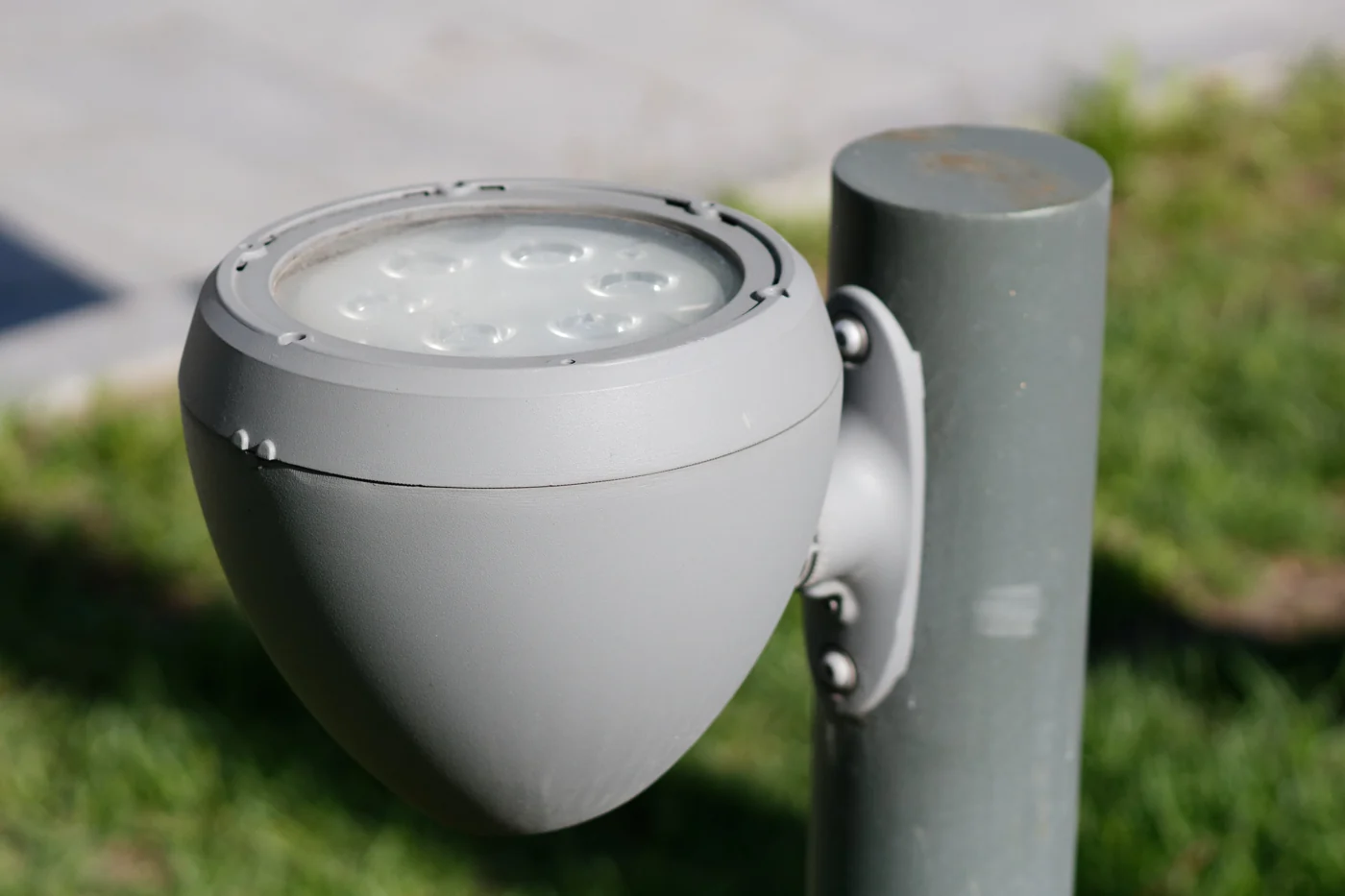
LED lighting modules
Linear light boards can mount along an aluminum extrusion; downlight and area-lighting arrays use a compact plate carrying several emitters. In both, sustained LED heat passes through the board toward the luminaire body or a separate heat sink. The board outline and fixing positions establish that contact, while the white surface surrounds the emitters within the optical assembly.
Automotive lighting
Headlamps and daytime-running lights pack their emitters into a confined housing near lenses, reflectors and control electronics. An aluminum PCB combines the LED circuit and a light metal backing that can contact the lamp’s cooling structure. Profile and fixing accuracy help locate the emitters, while the dielectric maintains electrical separation from the metal base.
Power and driver electronics
Converters, motor drives and LED drivers can use aluminum substrates for thermally loaded switching or rectifier stages. The board provides a route from the soldered power-device pads through the dielectric to the equipment cooling surface. Copper thickness and pad geometry carry the circuit current; dielectric selection maintains isolation from the metal beneath those conductors.
Get a quote for your aluminum PCB
Send your circuit files, board dimensions and quantity. Include a preferred laminate if you have one, or ask our team to help select the construction. Bare-board and assembly quotes are available.