
After PCBA is finished, if the finished product assembly does not happen right away, the PCBA must be stored. This prevents the PCBA from being exposed to air for a long time and affecting its performance.
Bare PCBs, loose moisture-sensitive components and completed PCB assemblies require different storage controls. Record the packaging condition, exposure history and supplier shelf-life guidance. Use a supplier-approved drying process only when needed; drying does not restore oxidized finishes or prove that an aged board is still solderable.
The main PCBA storage conditions are:
Applying conformal coating
Apply conformal coating only when the product specification calls for it, after required cleaning, inspection and testing. Coating may improve environmental protection, but it does not create a universal nine-month shelf-life extension or replace controlled packaging.
Vacuum packaging
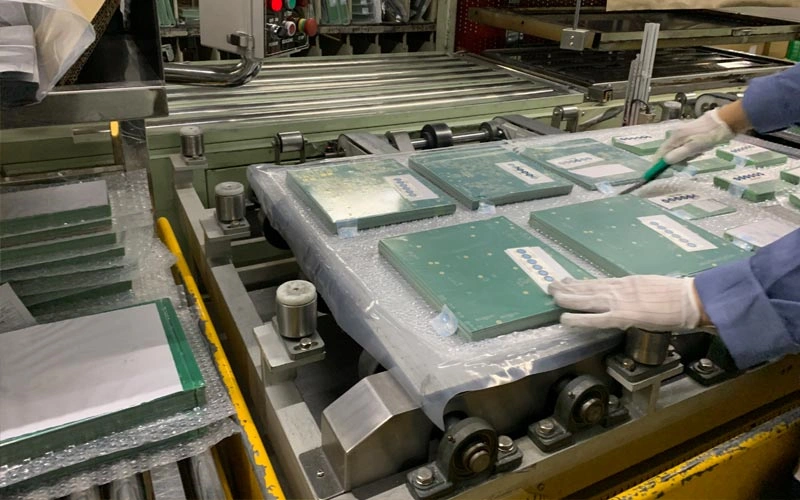
PCBA storage must avoid contact with air and water. First, use vacuum bags to pack the PCBA boards. When boxing, surround the box sides with a layer of bubble film. Bubble film provides cushioning rather than moisture control. Use suitable ESD-protective moisture-barrier packaging with specified desiccant and a humidity indicator when required. Also, desiccant beads are needed. Then sort and place them, and attach labels. After sealing, the box must be kept away from walls, off the ground, in a dry and ventilated place. Avoid sunlight.
Controlling warehouse temperature and humidity
Set storage conditions from the board or assembly supplier’s specification and the most restrictive installed component. Keep assemblies in suitable ESD-protective packaging in a clean, dry environment free of corrosive gases. Bare-board surface-finish shelf life does not by itself define the shelf life of a completed PCBA; verify finish condition and solderability before later soldering.
For PCBs with OSP process, because the protective film is thin, stricter storage conditions are needed for PCBA storage.
Why Expired PCBs Need Baking Before SMT and Reflow Soldering
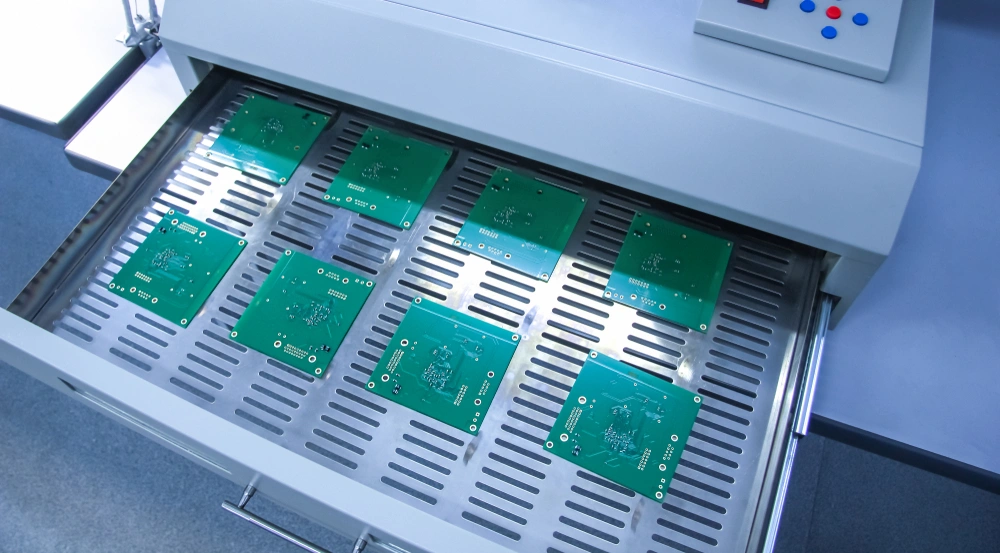
The main purpose of PCB baking is to remove moisture and dampness. It removes water absorbed inside the PCB or from the outside. Some PCB materials easily form water molecules. Also, PCBs may absorb moisture from the environment after being stored for some time. Water is one main cause of PCB blistering or delamination. Water also causes oxidation.
PCB Baking Condition Settings
- Assess bare-board drying from the laminate, thickness, finish, packaging and exposure history; age alone does not select a bake profile. Follow the board supplier’s instructions and the applicable board-handling specification.
- For stored boards, confirm package integrity and finish solderability before deciding whether moisture removal is needed. Baking does not reverse oxidation.
- If drying is required, obtain a validated time and temperature for that board construction and finish; do not transfer a profile from a different board.
- For boards beyond the supplier’s stated shelf life, quarantine the lot for engineering review and any required solderability or laminate checks. Disposition should follow the results and product requirements.
After drying, cool and package boards under the validated handling procedure. Record the allowed exposure interval and avoid repeated baking unless the supplier approves it.
PCB Baking Method
Support large boards to avoid warpage while allowing the airflow required by the validated drying process. Loading density, board spacing and oven uniformity affect moisture removal; do not assume a stack of 30 boards dries like an individual board.
For smaller boards, use a qualified fixture and loading pattern with controlled airflow. Confirm any racks, carriers or packaging are rated for the process temperature, and follow the approved cooling and repackaging procedure.
Precautions During PCB Baking
- Select the drying temperature from the laminate, surface finish and any installed components. Tg alone is not a complete drying limit; observe the supplier’s thermal limits and validated profile.
- Baked PCBs must be used as soon as possible. If not fully used, they should be re-vacuum packed early. If they are exposed in the workshop too long, they must be baked again.
- The oven must have exhaust drying equipment. If not, the evaporated water vapor will stay inside and increase its relative humidity. This is not good for PCB dehumidification.
- From a quality view, the fresher the PCB, the better the quality after soldering. Even if expired PCBs are baked before use, there is still some quality risk.
Baking Condition Judgment
-
For moisture-sensitive devices, inspect the moisture-barrier bag, humidity indicator card and moisture-sensitivity label. Interpret the card according to its instructions, then combine that result with MSL, floor-life tracking and the component supplier’s handling guidance.
An acceptable indicator reading does not reset previously consumed floor life. Keep the exposure record for each moisture-sensitive lot.
If the package or indicator does not meet the specified acceptance criteria, quarantine the lot and determine drying or other disposition using the supplier’s instructions and applicable J-STD-033 requirements.
- Track component exposure against its specified MSL floor life at the stated environmental conditions. Different MSLs have different limits; 72 hours is not a universal rule.
- Before reflow rework, review the installed moisture-sensitive components and the assembly’s exposure history. Use a rework-specific drying procedure that also respects connectors, batteries, coatings and other temperature-sensitive parts.
-
First baking requirements:
Determine any first drying cycle before selecting time and temperature:
a. Temperature: follow the device or board supplier’s validated profile.
b. Device time: select using MSL, package thickness, exposure and the permitted temperature.
c. Bare-board time: use the board supplier’s profile for that laminate, thickness and finish.
-
Re-baking conditions:
For assemblies requiring drying before rework:
a. Temperature: remain within the limits of every installed component and material.
b. Duration: use a validated assembly-specific drying procedure and record the cycle.
Inputs Needed to Select a Drying Profile
| Package Type | Primary Handling Requirement | Additional Check | Applicable Notes |
|---|---|---|---|
| BGA | Supplier-approved MSL profile | Package thickness and exposure | BGA geometry alone does not define MSL |
| QFP / TSOP | Supplier-approved MSL profile | Carrier temperature rating | Use the actual device label and datasheet |
| TQFP | Supplier-approved MSL profile | Floor-life record | Thin package does not by itself establish a drying time |
| TRANSFORMER | Supplier instructions | Winding, insulation and plastic limits | Do not apply an IC drying profile automatically |
| Other IC | Supplier-approved MSL profile | Package, exposure and temperature limits | No universal time applies to all ICs |
Disadvantages of PCB Baking
Baking speeds up oxidation of the PCB surface plating. A higher temperature and longer baking time are worse.
OSP and other finishes may degrade during drying. Obtain the board supplier’s finish-specific limits, minimize unnecessary heat exposure and verify solderability when storage or thermal history is uncertain. Do not apply a universal OSP temperature and time to every chemistry.