
IEC has set halogen-free standards for PCB makers, but what is a halogen-free PCB, really? Electronic products contain some specific materials. These materials may contain halogens at the highest allowed level. To create a “halogen-free PCB,” you need to replace some materials or reduce their use on the board. You also need to decide how much halogen can remain in the circuit. Some substitute materials need special design care, and you need to think about that too.
Halogens in PCBs
If you ask most designers where halogens are found in a PCB, they may not be sure. Halogens are usually found in brominated flame retardants (BFRs), chlorinated solvents, and polyvinyl chloride (PVC). Halogens are not always dangerous in every form or at every level. Holding a PVC pipe or drinking tap water will not cause health problems. But if you burn that pipe and inhale hazardous combustion products, including acidic hydrogen chloride fumes, that is a different matter. This is the main problem with halogens in electronics. They can be released at the end of the PCB life cycle. So where are halogens found in a circuit board?
As you know, PVC is used not only in pipes, but also in wire insulation, so it can be a source of halogens. Chlorinated solvents can be used to clean PCBs during manufacturing. BFRs are used in PCB laminates to lower the risk of fire. Now that we have checked the main sources of halogens in a circuit, what should we do?
Halogen-Free PCB
Like the RoHS lead-free rule, the halogen-free standard asks the CM to use new materials and new manufacturing methods. Like any standard set by different groups, “halogen-free” has its own clear limits. For common halogen-free laminate specifications such as IEC 61249-2-21, chlorine and bromine are each limited to 900 ppm and their combined amount to 1,500 ppm. These limits concern chlorine and bromine in the specified material, not every halogen in a finished assembly. RoHS restricts particular substances, including certain flame retardants; RoHS compliance alone does not establish halogen-free status.
So why do people still ask for “halogen-free” in quotes? Because meeting the standard does not always mean your PCB has no halogens at all. For example, Some extract-based ionic contamination tests measure only extractable ionic residues. They do not establish the total chlorine and bromine content of a laminate or flux. Select a total-halogen method appropriate to the specified material and compliance requirement. This means that to make a truly halogen-free board, you need to go beyond the standard.
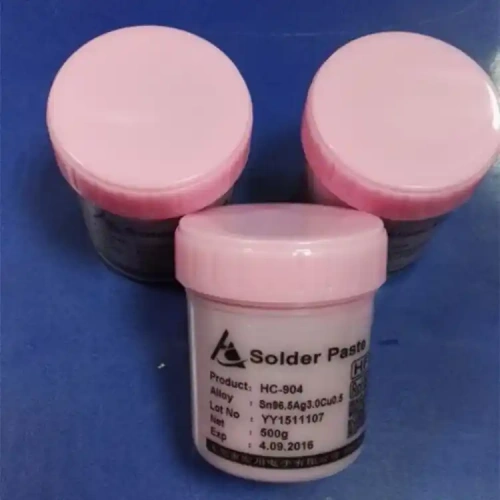
If you are looking for a specific halogen source, one is TBBPA, a common BFR used in laminates. To remove this source, you need to specify a halogen-free laminate, such as an active phosphorus-based laminate. Your flux and solder may also bring halogens into the PCB, so you also need to talk with the CM about possible substitutes there. Using new materials and new methods on the board can be hard, but halogen-free circuits have some benefits. Halogen-free status does not by itself establish thermal reliability or dielectric performance. Compare the selected laminate’s Tg, decomposition behavior, expansion, Dk and loss data against the assembly profile and electrical requirements.
Halogen-Free Board Design
The benefits of halogen-free boards come at the cost of more complexity, not only in manufacturing, but also in design. A good example is halogen-free solder and flux. Halogen-free types can sometimes change the ratio between solder and flux and cause solder beading. Solder beading is the formation of unintended solder beads, often near component terminations. Review paste volume, stencil apertures, land pattern, placement and reflow conditions with the assembler; changing pad definition is not a universal remedy.
Many new materials have their own design limits, so you may need to check with the manufacturer or do some research before using them. The number of halogen-free boards is growing, but they are still far from common. You should also talk with your CM to see whether they can make PCBs with halogen-free materials.
Over time, we seem to find more and more materials used in daily life that may bring health risks. This is why groups like IEC have developed halogen-free board standards. Remember where halogens are usually found, such as BFRs, solvents, and insulation materials, so you know what to replace if you need a halogen-free board. Different standards allow different halogen levels, and some may or may not detect certain kinds of halogens. You need to do your research first so you know where the problem areas are in your PCB. After you know which materials to use, it is best to check with your manufacturer and CM to find the best way forward. You may need to adjust the design or work with the CM on some manufacturing steps so your board can be built successfully.